Texas Roadhouse Ribeye vs LongHorn Outlaw Ribeye: 12 oz vs 20 oz
Texas Roadhouse Ribeye vs LongHorn Outlaw Ribeye: 12 oz vs 20 oz
For a normal steakhouse appetite, order the Texas Roadhouse 12 oz Ft. Worth Ribeye: boneless, richly marbled, and listed at 960 calories before sides. For a big occasion appetite, order the LongHorn 20 oz Outlaw Ribeye: bone-in, listed at 1,250 calories before sides. If you want 20 oz at Texas Roadhouse instead, order the Texas Bone-In Ribeye, listed at 1,480 calories before sides, which is the true size match for the Outlaw. Prices vary by location, so check your location before you decide on value, and note that the LongHorn price is not nationally verified in this guide.
This texas roadhouse ribeye vs longhorn outlaw ribeye comparison starts with an honest warning, because the title itself is not a like for like weight match. The Texas steak in the title is 12 oz and boneless, while the LongHorn steak in the title is 20 oz and bone-in. That means you are comparing a sensible weeknight ribeye with a celebration sized ribeye, and the calorie gap that follows is mostly a size gap, not proof that one kitchen cooks lighter than the other. I still think the comparison is worth doing, because this is exactly how real diners choose: do I want the manageable Texas ribeye tonight, or do I want to go big with the Outlaw?
To keep it fair, this guide gives you both comparisons. First, the title matchup: Texas 12 oz against LongHorn 20 oz. Then, the size matched matchup: Texas 20 oz Bone-In against LongHorn 20 oz Outlaw. Same cut family, same advertised weight, different kitchens, different sides, and different calorie counts. Read the table first, then read the flavor and sides sections, because a ribeye decision is never just a number on a table.
Texas Roadhouse Ribeye vs LongHorn Outlaw Ribeye at a Glance
The figures below are for the steak alone, before sides, salads, bread, butter, or sauces. Texas Roadhouse figures come from the chain nutrition listing and this site’s earlier ribeye guides. LongHorn figures come from LongHorn nutrition listings. Texas prices below are the national average style figures used in this site’s earlier ribeye guides, and they vary by location. LongHorn prices vary by location too, and no nationally verified LongHorn price is claimed in this guide: third party menu listings show a starting figure around $35.79 for the Outlaw, but that is a third party listing figure, not an officially verified national price, so check your location.
| Steak | Cut | Calories | Protein | Price note |
|---|---|---|---|---|
| Texas Ft. Worth Ribeye 12 oz | Boneless | 960 | 78g | About $24.99, varies by location |
| Texas Bone-In Ribeye 20 oz | Bone-in | 1,480 | 143g | About $30.99, varies by location |
| LongHorn Outlaw Ribeye 20 oz | Bone-in | 1,250 | 94g | Varies by location, check your location |
| LongHorn Ribeye 12 oz | Boneless | 810 | 66g | Varies by location, check your location |
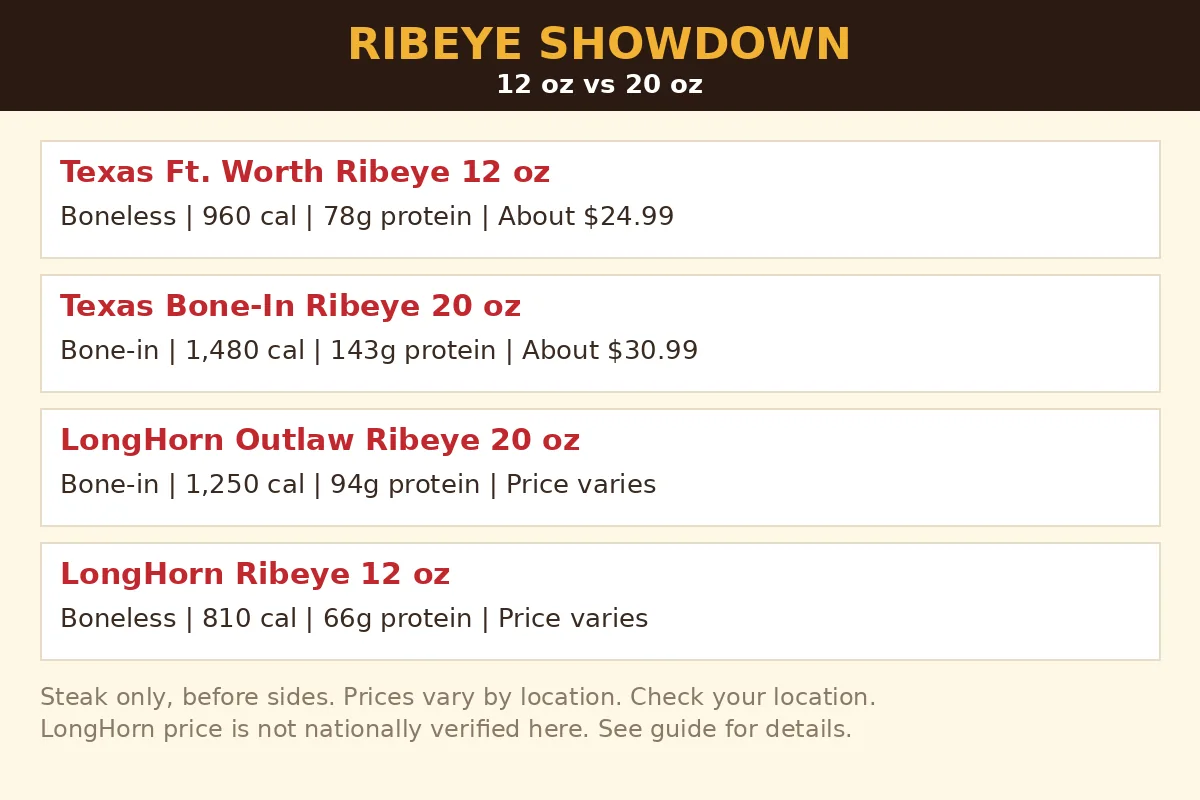
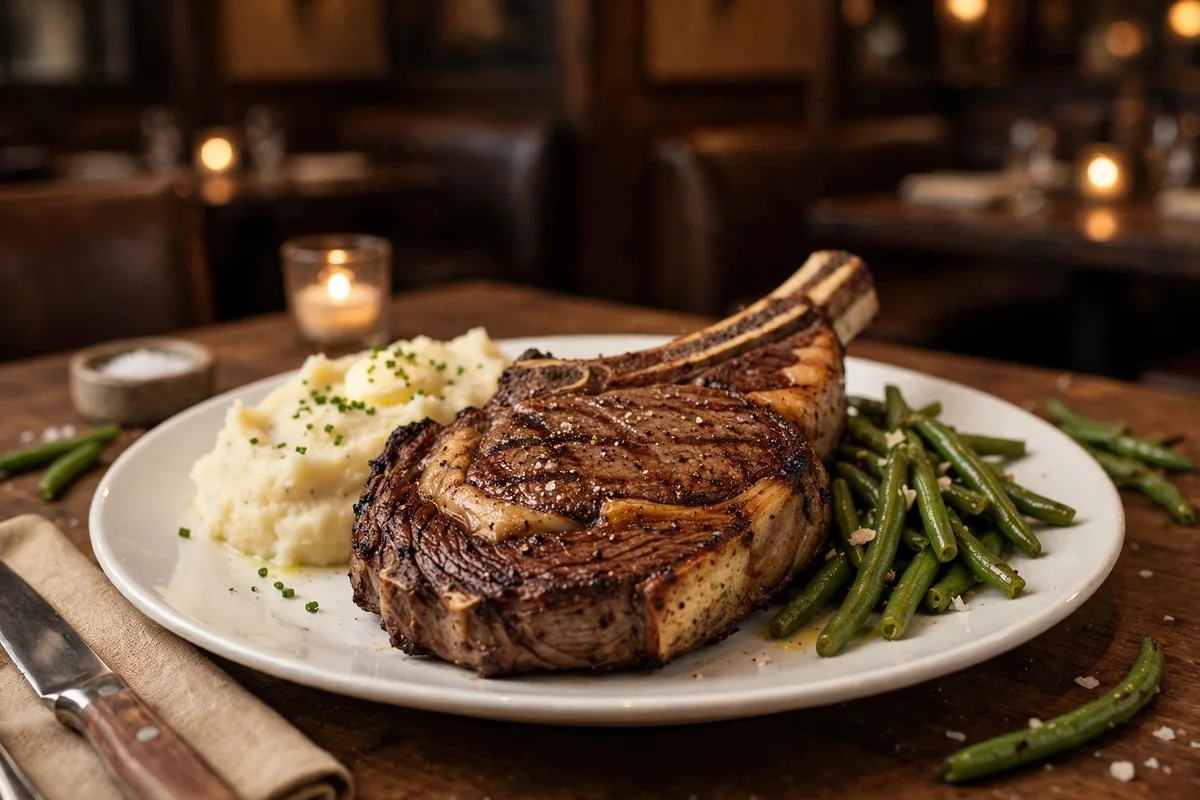
Read the size matched row before you declare a winner. At 20 oz bone-in against 20 oz bone-in, Texas lists 1,480 calories and 143g of protein, while LongHorn lists 1,250 calories and 94g of protein. That gap is real on paper, but remember what bone-in weight means: part of the advertised 20 oz is bone you do not eat, and trimming, fat cap, and cooking can shift the edible portion from one steak to the next. At 12 oz boneless against 12 oz boneless, the picture flips in a smaller way: Texas lists 960 calories and 78g of protein, while LongHorn lists 810 calories and 66g of protein. So neither kitchen is simply lighter across the board. The honest summary is that size drives most of the headline gap, and the kitchen and cut details drive the rest.
What Each Steak Actually Tastes Like
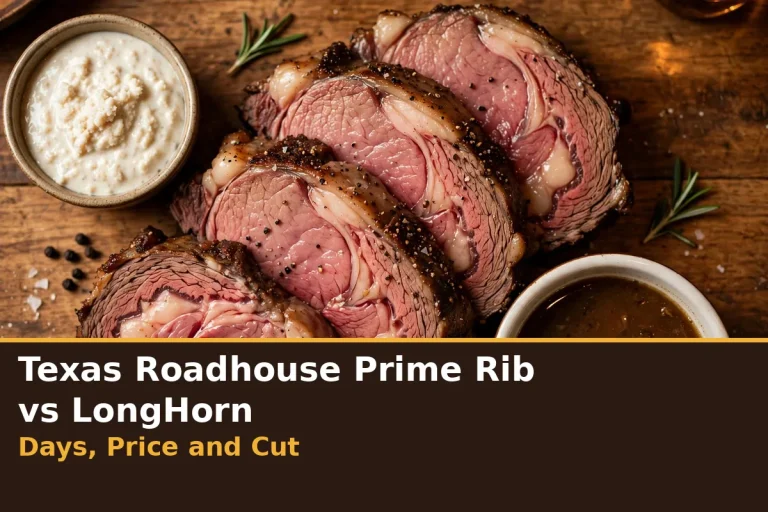
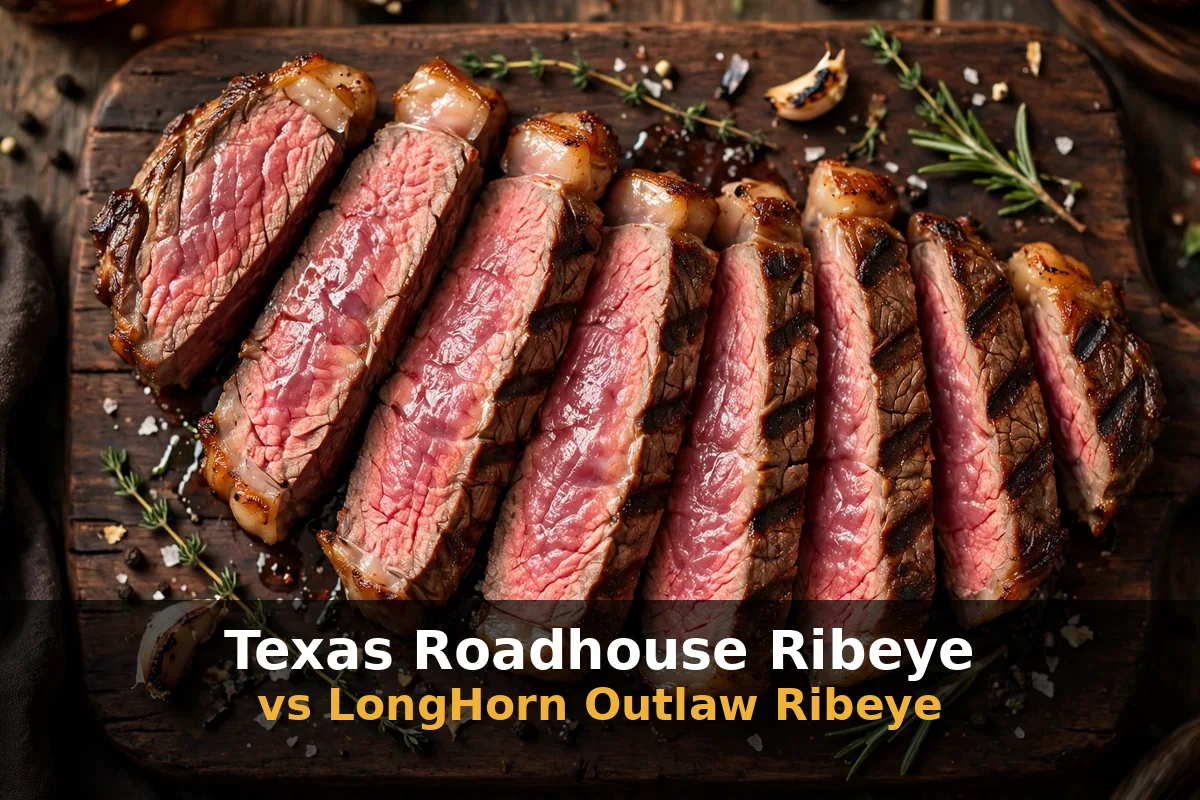
Both steaks are ribeyes, so both bring the marbling that makes a ribeye taste like a ribeye: beefy, juicy, and richer than a lean sirloin. The Texas Ft. Worth Ribeye is a boneless, hand-cut steak, grilled to order, and its selling point is that marbling all the way through, with no bone to cut around. You get a straightforward, sliceable steak that eats evenly from edge to center, which is why the 12 oz is such an easy order when you want ribeye flavor without committing to a giant plate.
The LongHorn Outlaw Ribeye leans into the big steak theater. LongHorn describes it as a bone-in ribeye, seasoned with its Char Seasoning, flame grilled, and finished with a lemon sauce rather than butter. That finish matters for flavor: expect a charred, seasoned crust with a brighter finish than a butter finished steak, and a bone that helps the meat near it stay juicy. If you love cutting around a bone and working through a steak with real presence, the Outlaw delivers that experience in a way the boneless Texas 12 oz simply is not trying to deliver.
Cooking advice is the same at both places, and it matters more with ribeye than with leaner cuts. Order medium rare if you want the fat to render without drying the steak, and tell your server if you want the fat cap trimmed or left on, since that changes both flavor and how rich the last few bites feel. A ribeye cooked well done will still be beefy, but it will lose much of the juiciness that justifies ordering a ribeye in the first place.
Sides, Value, and the Full Plate
Sides change the value math, so compare the whole plate, not just the steak. Every Texas Roadhouse steak dinner comes with two sides, which means the Texas 12 oz and the Texas 20 oz bone-in both arrive as complete dinners without a separate side charge for those two choices. A LongHorn Outlaw order comes with a salad choice and one side dish, so the plate structure is different: salad plus one side, rather than two sides. Neither structure is automatically better, but if you were planning on two hot sides, the Texas setup fits that plan more naturally, while the LongHorn setup fits a diner who wants a salad first.
On price, I will not pretend this guide can crown a national value winner, because the LongHorn price is not nationally verified here. The Texas figures used in this site’s earlier guides sit around $24.99 for the 12 oz Ft. Worth Ribeye and around $30.99 for the 20 oz Bone-In Ribeye, before sides are counted separately, since sides are included in the dinner. For LongHorn, check your location and ask for the current Outlaw price before you sit down, because third party listings differ by market and a single national figure would mislead you. If your local LongHorn price lands near the third party starting figure around $35.79, the Texas 20 oz bone-in looks like the lower priced 20 oz on paper, but only your local menu can confirm that on the night you go.
One more value note that diners forget: the bone. A 20 oz bone-in steak sounds like 8 oz more meat than a 12 oz boneless steak, but part of that 20 oz is bone, so the edible gap is smaller than the menu gap. If you are splitting a steak, sharing a 20 oz bone-in makes sense. If you are eating alone and you are not very hungry, the 12 oz boneless is the smarter plate, because you finish it happy instead of pushing through the last rich bites out of obligation.
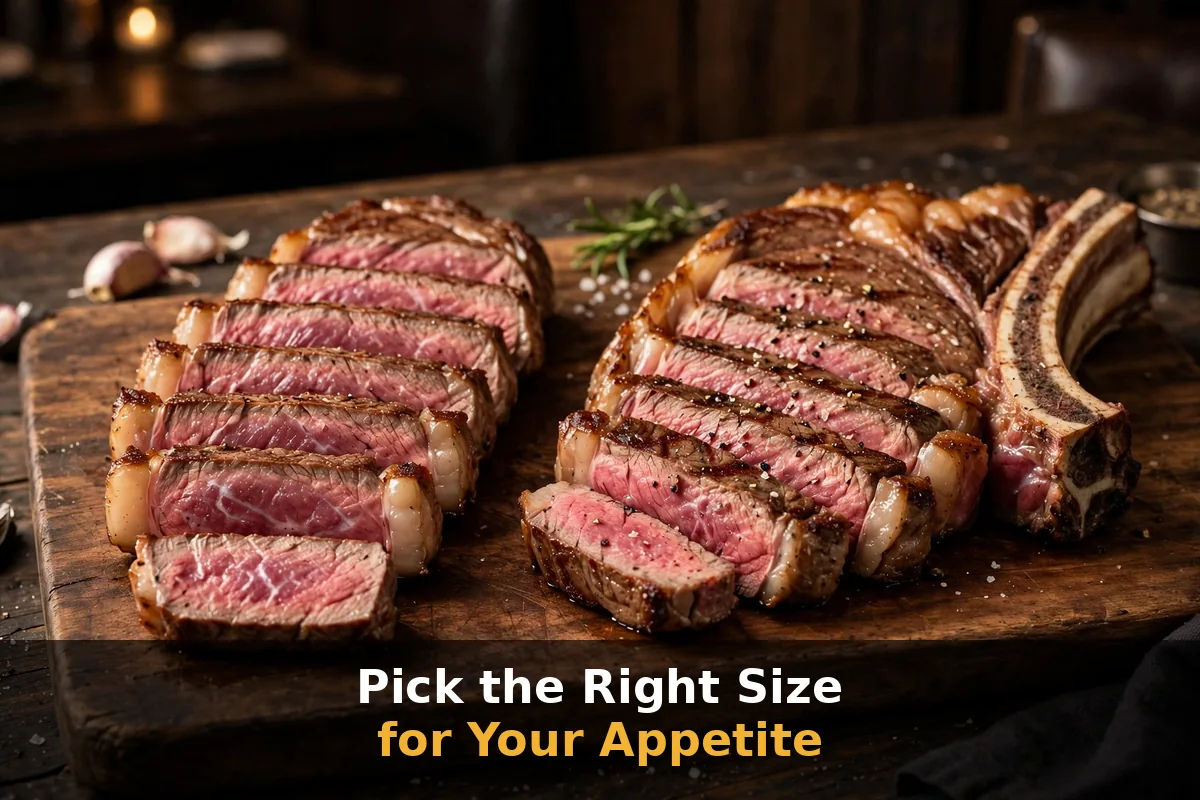
Pick the Right Size for Your Appetite
Pick by appetite, not by pride. Choose the 12 oz if you want a full ribeye experience, a normal dinner, and room for a side or two without feeling stuffed. Choose a 20 oz bone-in, at either chain, if you are very hungry, celebrating, or planning to share, and if you love the slower, bone-in eating experience. If you are torn between the two chains at 20 oz, let the sides and the local price decide: Texas gives you two sides, LongHorn gives you a salad plus one side, and your local prices may settle it faster than any calorie table can.
How I would order: On a normal steak night, I would order the Texas 12 oz Ft. Worth Ribeye, cooked medium rare, with green beans and a salad style side that keeps the plate from getting too heavy. On a celebration night when I want the Outlaw experience without leaving Texas Roadhouse, I would order the Texas 20 oz Bone-In Ribeye, cooked medium rare, and I would plan to share the last few bites or take them home rather than force them. If I am actually at LongHorn, I would order the 20 oz Outlaw, ask about the lemon sauce finish, and pick the salad plus the side I am most in the mood for that night.
Which is bigger, the Texas Roadhouse 12 oz ribeye or the LongHorn Outlaw Ribeye?
The LongHorn Outlaw Ribeye is bigger on the menu at 20 oz bone-in, against the Texas Ft. Worth Ribeye at 12 oz boneless. For a true size match, compare the Outlaw with the Texas Bone-In Ribeye, which is also 20 oz bone-in. Remember that part of a bone-in weight is bone, so the edible gap between 20 oz bone-in and 12 oz boneless is smaller than 8 oz suggests.
How many calories are in the Texas ribeye vs the LongHorn Outlaw ribeye?
Before sides, the Texas 12 oz Ft. Worth Ribeye is listed at 960 calories, the Texas 20 oz Bone-In Ribeye at 1,480 calories, and the LongHorn 20 oz Outlaw Ribeye at 1,250 calories. The size matched LongHorn 12 oz Ribeye is listed at 810 calories. Sides, salads, bread, butter, and sauces add to every figure here, so use these numbers for the steak alone.
Is the LongHorn Outlaw Ribeye bone-in?
Yes. The Outlaw Ribeye is a 20 oz bone-in ribeye. LongHorn describes it as seasoned with its Char Seasoning, flame grilled, and finished with a lemon sauce rather than butter. The Texas match for it is the Texas Bone-In Ribeye, also 20 oz and bone-in, rather than the boneless 12 oz Ft. Worth Ribeye.
Which ribeye is better value, Texas Roadhouse or LongHorn?
No firm national value winner is claimed in this guide, because the LongHorn price is not nationally verified here and prices vary by location. Texas figures in this site’s earlier guides sit around $24.99 for the 12 oz and around $30.99 for the 20 oz bone-in. Check your local LongHorn price, and compare the full plate too: Texas dinners include two sides, while LongHorn Outlaw orders include a salad plus one side.
What sides come with each ribeye?
Texas Roadhouse steak dinners come with two sides of your choice. LongHorn Outlaw orders come with a salad choice and one side dish. That difference can decide the meal if you want two hot sides, or if you prefer starting with a salad, so pick the plate structure that fits your appetite, not just the steak.
Should I order the 12 oz or the 20 oz ribeye?
Order the 12 oz if you want a satisfying ribeye dinner without overordering, especially if you plan to enjoy sides too. Order a 20 oz bone-in if you are very hungry, celebrating, or sharing, and if you enjoy the bone-in experience. If you are at Texas Roadhouse and want 20 oz, order the Bone-In Ribeye. If you are at LongHorn and want 20 oz, order the Outlaw Ribeye.
That is the whole texas roadhouse ribeye vs longhorn outlaw ribeye decision in one line: 12 oz boneless for a great normal night, 20 oz bone-in for a big night, and the Texas Bone-In Ribeye whenever you want the Outlaw size without leaving Texas Roadhouse. Check your location for the current LongHorn price, pick sides that fit your appetite, order medium rare if you want the fat at its best, and enjoy the ribeye for what it is: the richest, most forgiving steak on either menu.
Related Texas Roadhouse Guides
last verified: October 25, 2026. Source: official Texas Roadhouse website, where the chain publishes its nutrition information, with LongHorn figures from LongHorn nutrition listings.