Texas Roadhouse Prime Rib 16 oz Calories: the Full Nutrition Picture
Texas Roadhouse Prime Rib 16 oz Calories: the Full Nutrition Picture
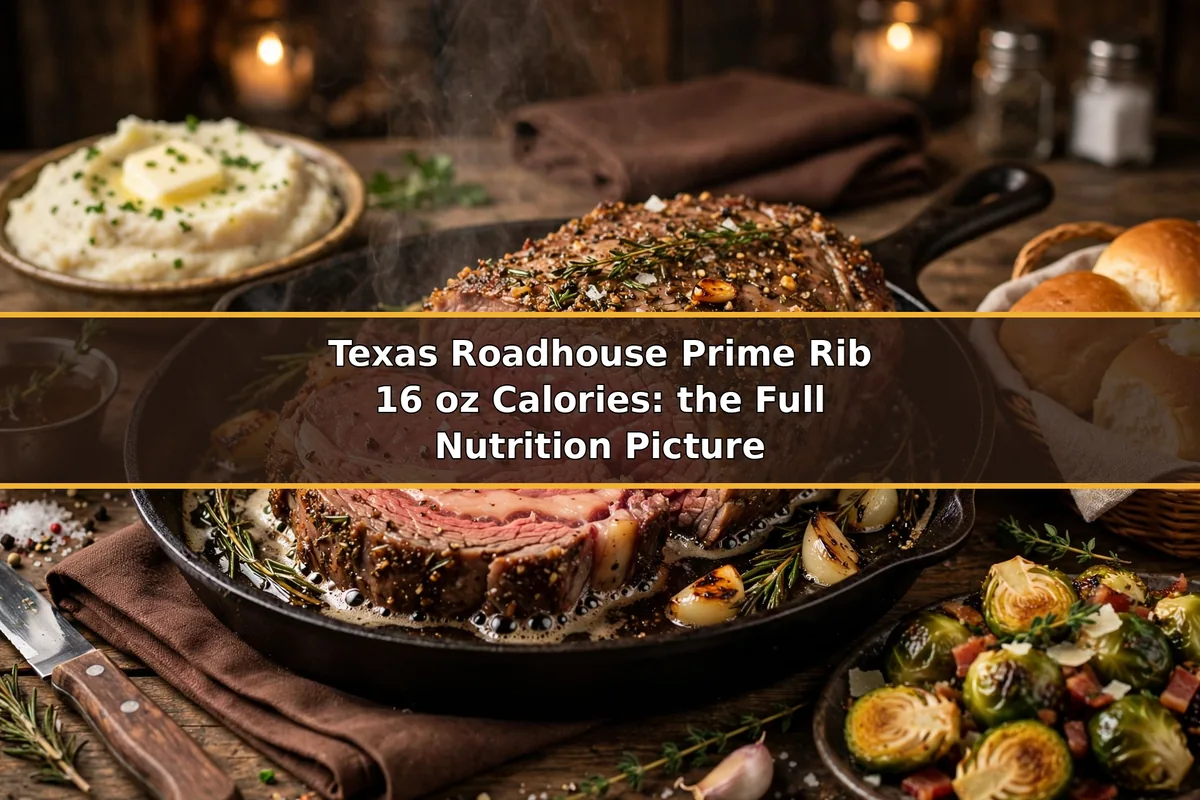
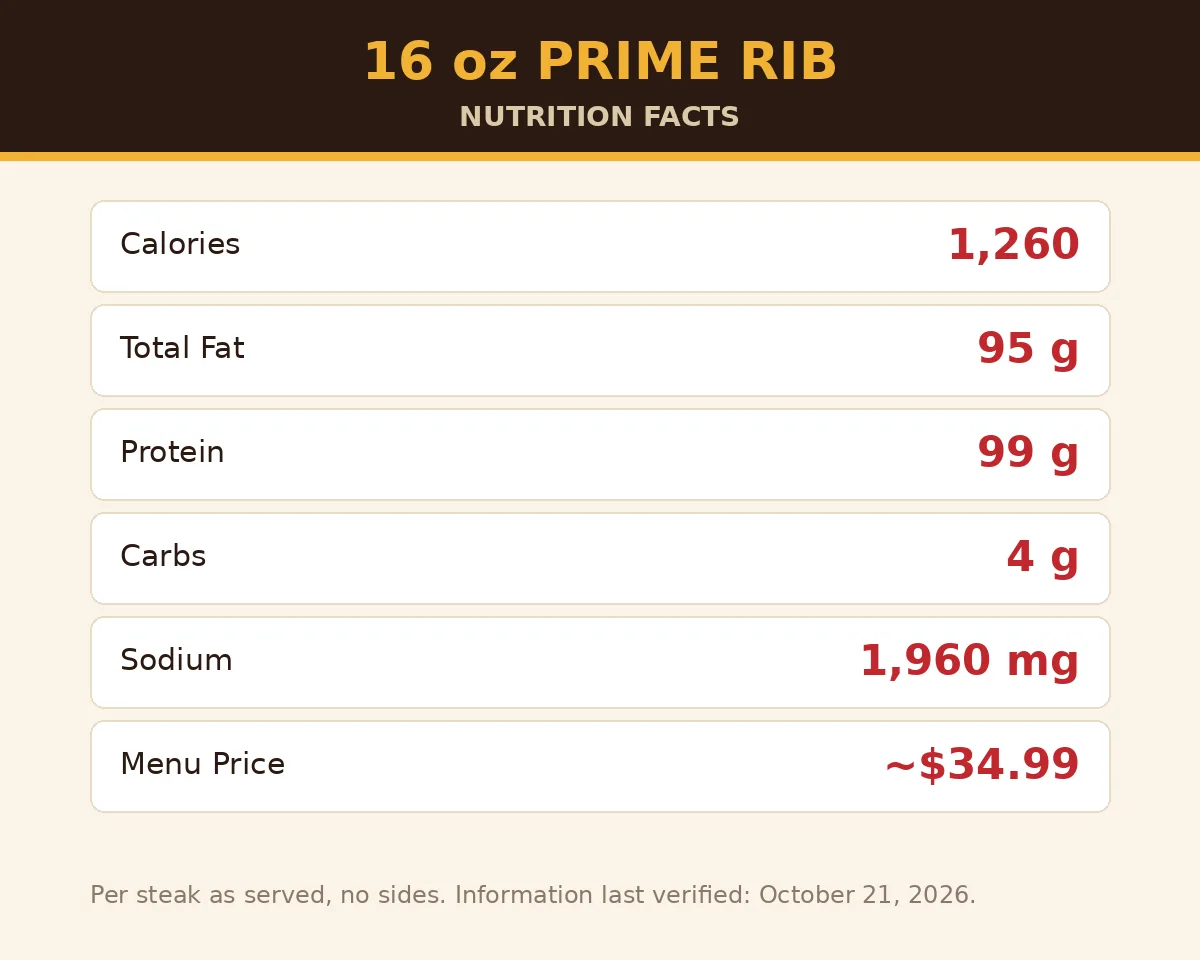
The texas roadhouse prime rib 16 oz calories come in at 1,260 calories, 95 grams of fat, 99 grams of protein, 4 grams of carbs, and 1,960 mg of sodium, with a menu price around $34.99 before sides. That is for the steak alone, no sides, no add-ons. It is the largest prime rib cut on the menu, a slow-roasted, hand-carved weekend centerpiece, and nutritionally it is one of the heaviest single plates in the building. All figures below are per steak as served.
I love prime rib the way most people love a holiday: deeply, and on a schedule. The Texas Roadhouse 16 oz prime rib is the biggest cut they offer, and it earns every one of its 1,260 calories. It is slow-roasted in house, crusted with a savory herb blend, carved thick to order, and served with au jus. This is not a weeknight plate. It is the plate you order when you came for the full experience, and the numbers below will tell you exactly what that experience costs you nutritionally.
Below you will find the complete texas roadhouse prime rib 16 oz nutrition breakdown, where the calories and sodium actually come from, a side-by-side look at the 12 oz, 14 oz, and 16 oz cuts, and honest tips for building a lighter dinner around the biggest cut without giving up the cut itself. Prices and exact figures vary by location, and published sources differ slightly on some numbers, which is why every figure here is checked against the sources that agree.
Texas Roadhouse Prime Rib 16 oz Nutrition: The Full Table
Here are the prime rib 16 oz calories and full macros, steak alone, as served without sides. Two things stand out immediately: the 95 grams of fat, which is the engine of the 1,260-calorie count, and the 1,960 mg of sodium, which is nearly a full day’s worth in a single steak. The au jus it comes with only pushes the sodium story further.
| Nutrient | Per 16 oz Prime Rib | Context |
|---|---|---|
| Calories | 1,260 | The steak alone, no sides |
| Total Fat | 95 g | From slow-roasted marbling and crust |
| Protein | 99 g | Very high, among the top protein plates |
| Carbohydrates | 4 g | From the herb crust seasoning |
| Sodium | 1,960 mg | Nearly a full day’s limit in one cut |
| Menu price | ~$34.99 | National average; varies by location |
Read the table the way a regular reads a menu: the 99 grams of protein make this one of the most satisfying plates at Texas Roadhouse, and it is why you do not leave hungry. But the 1,260 calories and 1,960 mg of sodium put it in true celebration territory. For reference, that is more calories than the 12 oz Ft. Worth Ribeye at 960 and more sodium than almost any single steak on the menu. Prime rib is a marbled, slow-roasted roast, not a lean grilled cut, and the numbers tell you exactly that story.
Note on figures: two independent published sources (Eat This, FatSecret) agree on 1,260 calories, 95 g fat, 99 g protein, 4 g carbs, and 1,960 mg sodium for the 16 oz cut. Some menu-reference sites list the 16 oz at 1,230 calories and the price as low as $31.99, so your location may differ slightly.
Where the 1,260 Calories Actually Come From
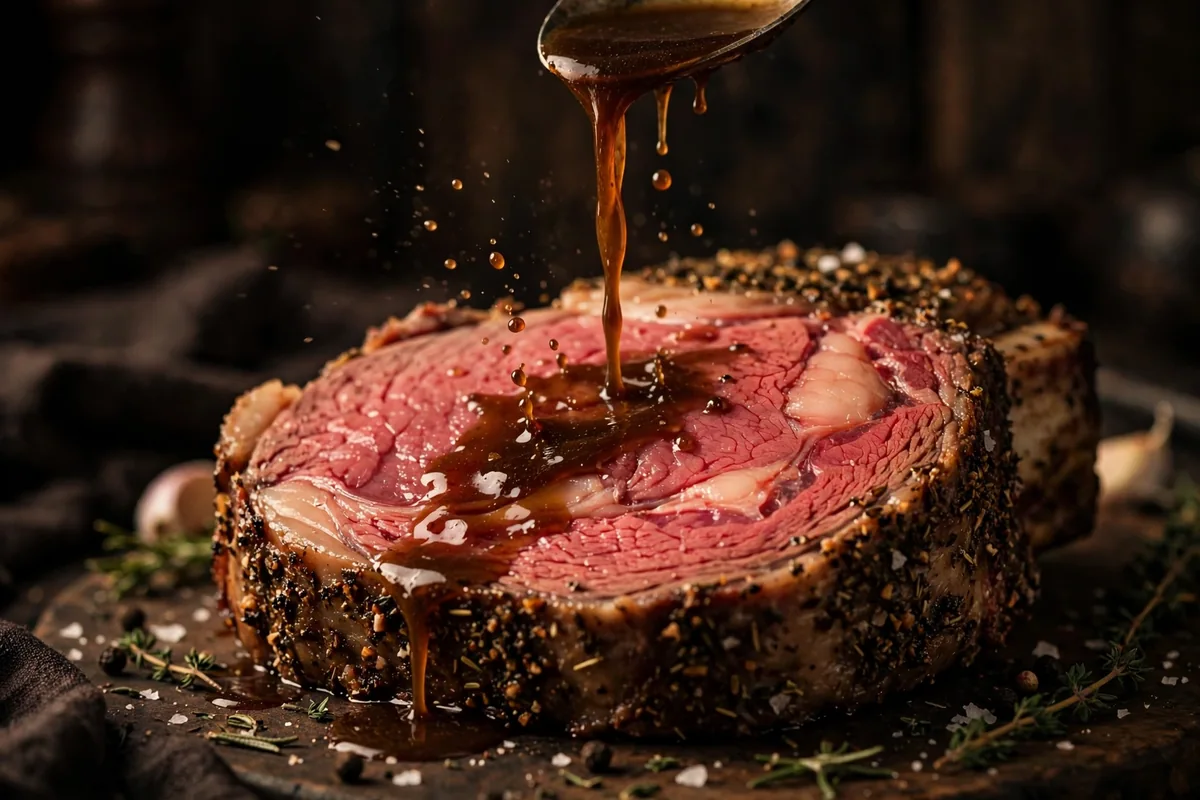
The prime rib 16 oz fat grams tell the whole story: prime rib is cut from the rib primal, the most marbled section of the steer, and then it is slow-roasted, which keeps all of that intramuscular fat in the meat instead of rendering it off into a grill fire. Fat has more than twice the calories per gram of protein, so 95 grams of fat contributes roughly 855 of the 1,260 calories on its own. The savory herb crust adds the 4 grams of carbs and a meaningful share of the 1,960 mg of sodium, and the au jus served alongside adds sodium on top of what is counted here.
What this means in practice: almost none of the calories come from anything you can peel off. There is no breading, no hidden sauce in the count, no stuffing. The number is the roast being a roast. That also means the usual tricks change very little on this plate: trimming visible fat is the one move that genuinely moves the needle, because that fat is the calorie concentration in its purest form. Everything else about this dish is about how you eat around it, which is where the comparison below comes in.
Prime Rib: 12 oz vs 14 oz vs 16 oz
The three prime rib cuts scale nearly perfectly with weight, which makes the decision simple math. Every figure is the steak alone, without sides. Published figures for the smaller cuts come from Eat This; sources vary more on the small cuts than on the 16 oz, so treat these as the published consensus.
| Size | Calories | Fat | My Take |
|---|---|---|---|
| 12 oz | 950 | 72 g | The moderate prime rib |
| 14 oz | 1,110 | 84 g | The middle lane |
| 16 oz | 1,260 | 95 g | The full experience |
Notice the pattern: roughly 78 to 80 calories per ounce, steady across sizes. Dropping from 16 oz to 12 oz saves 310 calories and 23 grams of fat, which is a genuinely meaningful cut, while the 14 oz splits the difference cleanly. Protein and sodium scale with weight too, so the 12 oz runs a lower sodium load if that is a concern for you. There is no wrong answer here, only honest ones: order the size that matches the evening you are having.
Which Prime Rib Size Should You Order?
If you want the prime rib experience on a lighter plan, the 12 oz at 950 calories is your move: same slow-roasted flavor, same herb crust, roughly 25 percent fewer calories than the 16 oz. If this is your regular Texas Roadhouse night and the prime rib is the reason you came, the 14 oz at 1,110 is the classic middle lane. Save the 16 oz for the birthday dinner, the celebration, or the table where you split it: two people each get an 8 oz portion at about 630 calories with roughly 49 grams of protein, which is suddenly a very reasonable plate.
Is the 16 oz Prime Rib Worth About $34.99?
At roughly $34.99 with two made-from-scratch sides and fresh-baked bread included, the 16 oz prime rib runs about two dollars an ounce for a slow-roasted, hand-carved cut that restaurants charge far more for elsewhere. The 12 oz is cheaper but the per-ounce value is nearly identical, so choose on appetite, not on the math. Prime rib is also usually a weekend offering at Texas Roadhouse, so part of what you are paying for is the occasion: the roast takes hours in the oven, it is only on the menu when it is on the menu, and that scarcity is baked into the experience. In other words, the 16 oz is the celebration size at a celebration price, and it is honest about being both.
How to Keep the 16 oz Prime Rib Dinner Lighter
The steak is 1,260, but the plate is what you actually eat, and the sides decide the damage here more than the steak does. A loaded baked potato plus two rolls can turn a 1,260-calorie steak into a 2,000-calorie dinner before you have even thought about dessert. Swap the loaded potato for fresh vegetables or green beans, get the au jus served in a cup on the side so you control the dip, set a one-roll limit, and the same steak lands as a dinner in the 1,400 to 1,500 range that still feels like a steakhouse night out.
The other honest move is the split: a 16 oz prime rib divides cleanly into two 8 oz portions at about 630 calories each, each with roughly 49 grams of protein, which is a full, satisfying meal with light sides. And if the sodium number caught your eye, ask for the au jus on the side and go light on it: the cup of dipping juice is a sodium multiplier, and the roast is flavorful enough on its own.
My personal tip: The two moves that matter most on this plate are trimming the visible fat cap (the single highest-calorie bite on the plate) and getting the au jus on the side. Together they shave real calories and a big chunk of sodium without touching the part of the roast you actually love.
What are the texas roadhouse prime rib 16 oz calories?
The 16 oz prime rib has 1,260 calories, with 95 grams of fat, 99 grams of protein, 4 grams of carbs, and 1,960 mg of sodium. These figures are for the steak alone, without sides, and the menu price is around $34.99.
How much protein is in the 16 oz prime rib?
99 grams of protein, one of the highest-protein single items on the Texas Roadhouse menu. That is part of why the cut is so filling: the protein alone would cover most of a day’s needs for many people.
Why is the 16 oz prime rib so high in sodium?
The 1,960 mg of sodium comes from the savory herb and salt crust plus the natural sodium of the beef, and the au jus served alongside adds more on top. It is nearly a full day’s commonly cited 2,300 mg limit in one steak, which is worth knowing before the sides.
Is the 12 oz or 16 oz prime rib better value?
The per-ounce value is nearly identical, so choose on appetite: the 12 oz runs about 950 calories and a lower price, while the 16 oz at 1,260 calories is the celebration cut. The 14 oz at 1,110 calories splits the difference if you want a middle lane.
Is the 16 oz prime rib available every day?
Prime rib is usually a weekend offering at Texas Roadhouse, commonly available Friday through Sunday and more often in fall and winter. Availability varies by location, so it is worth checking before you go.
Do the calorie counts include the sides?
No. The 1,260 calories are for the 16 oz steak alone. Your two included sides are counted separately and can add several hundred calories depending on your choice. The au jus is typically served with the steak and adds sodium on top of the counted figure.
That is the texas roadhouse prime rib 16 oz calories picture in full: 1,260 calories, 95 grams of fat, 99 grams of protein, 1,960 mg of sodium, and about $34.99 for the biggest, most indulgent cut on the menu. The fat is the flavor, the protein is the satisfaction, the sodium is the thing to watch, and the sides are where your dinner total is actually decided. Order the 16 oz for the celebration, trim the fat cap, and enjoy every slow-roasted bite.
Related Texas Roadhouse Guides
Information last verified: October 22, 2026. Source: texasroadhouse.com