Copycat Texas Roadhouse BBQ Sauce for Ribs and Pulled Pork
Copycat Texas Roadhouse BBQ Sauce for Ribs and Pulled Pork
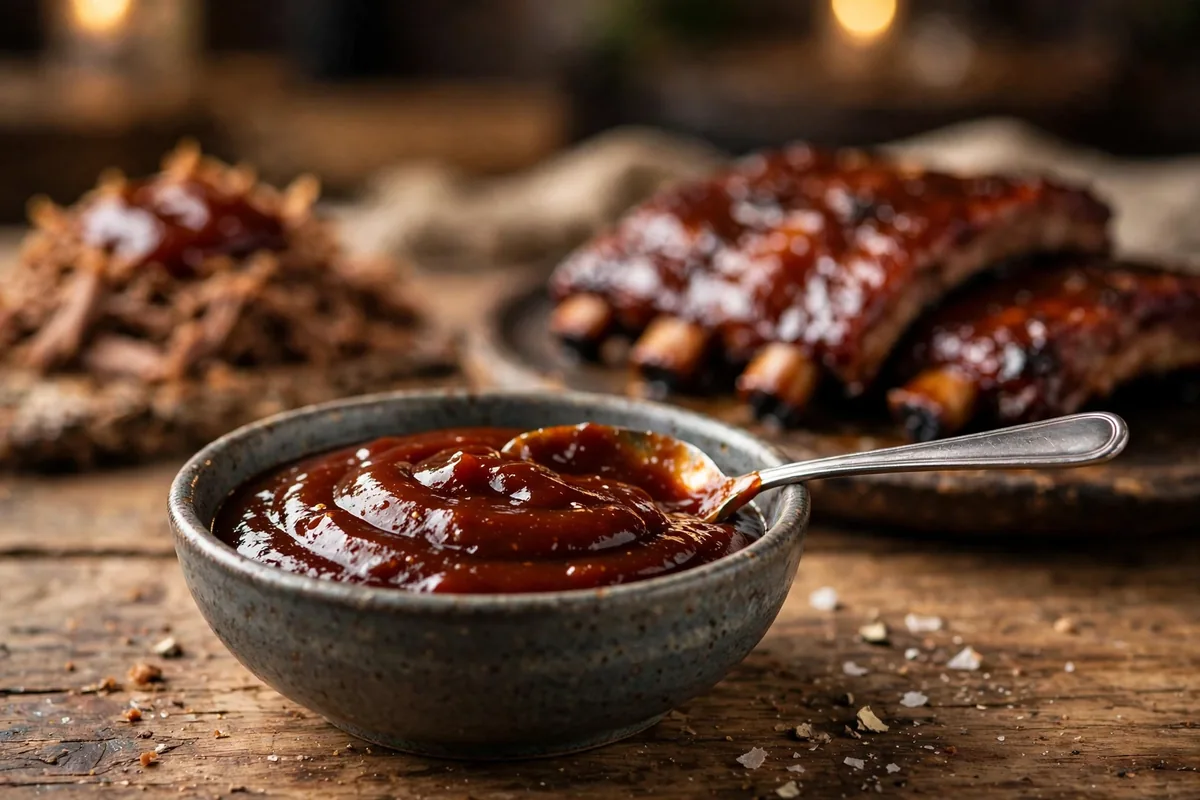
This copycat Texas Roadhouse BBQ sauce recipe is a sweet, smoky, tangy stovetop sauce made from ketchup, dark brown sugar, apple cider vinegar, molasses, honey, mustard, and Worcestershire sauce, with smoked paprika and a little liquid smoke for the smoky note. Whisk everything together in a saucepan, bring it to a gentle simmer, and cook uncovered for 15 to 20 minutes until it thickens enough to coat the back of a spoon. It makes about 2 cups, keeps up to 2 weeks in the fridge, and is best brushed onto ribs and pulled pork near the end of cooking, so the sugar caramelises instead of burning. It is a home recreation inspired by the restaurant sauce, not the official Texas Roadhouse recipe.
The first time I had Texas Roadhouse ribs, the sauce was the part I kept thinking about afterwards. Sweet first, then tangy, with a smoky finish that made the ribs taste like more than just meat and heat. This copycat Texas Roadhouse BBQ sauce recipe is my kitchen version of that sauce, built from the ingredients published copycat versions keep coming back to: ketchup, brown sugar, apple cider vinegar, molasses, honey, mustard, Worcestershire sauce, and smoked paprika. It takes about 25 minutes on the stovetop, and one batch makes about 2 cups, enough for ribs and pulled pork with some left over for the jar.
Copycat, not official: Texas Roadhouse describes its sauce as a St Louis style sauce, sweet and smoky with a zesty spice finish, served with its fall-off-the-bone ribs. This article recreates that idea at home with common pantry ingredients and my own amounts and method. It does not claim to be the restaurant recipe, and it does not copy any official preparation sheet. Published copycat versions disagree on the exact ratios, so the amounts below are a tested middle ground, and the variance is flagged honestly where it matters. No prices are given here, because this is a recipe, not a menu guide, so check your location before you order the restaurant version.
Copycat Texas Roadhouse BBQ Sauce Recipe at a Glance
The table below is the whole recipe in one look, before you open a single jar. Read the sweetness and tang rows first, because those two ingredients vary the most between published copycat versions, and getting them right sets the flavour of the whole batch. Read the cook and storage rows second, because a great sauce still needs a gentle simmer and a clean jar to keep well. Everything else is just whisking, waiting, and tasting as it thickens.
| Recipe element | What to use | Why it matters |
|---|---|---|
| Sauce base | 1 cup ketchup, 2 tbsp tomato paste (tomato paste optional, for deeper colour) | Sweet tomato backbone (the base every copycat version shares) |
| Sweetness | 1/2 cup dark brown sugar, packed (plus 2 tbsp molasses and 2 tbsp honey) | Sticky sweetness (published versions range from 1/3 to 3/4 cup sugar) |
| Tang | 1/4 cup apple cider vinegar (per batch) | Zesty bite (published versions range from 3 tbsp to 1/2 cup) |
| Savoury depth | 1 tbsp Worcestershire sauce (plus 1 tbsp yellow mustard) | Umami and zing (the mustard adds the tangy finish) |
| Smoke | 1 tsp smoked paprika (plus 1/2 tsp liquid smoke, optional) | Smoky note (smoke flavour without a smoker) |
| Spice | 1 tsp garlic powder, 1 tsp onion powder (plus 1/2 tsp chili powder) | Warm background flavour (kept mild so the sauce suits ribs and pork) |
| Heat | 1/4 tsp cayenne pepper (optional) | Gentle warmth (leave it out for a mild batch) |
| Cook | Simmer 15 to 20 minutes, uncovered (low heat, stirring often) | Flavours meld (the sauce thickens and darkens as it cooks) |
| Yield | About 2 cups (about 32 tablespoons) | One batch, one cookout (enough for 2 racks of ribs or 2 lb pulled pork) |
| Storage | Fridge up to 2 weeks in a sealed jar (cool before jarring) | Pantry staple (freezes well for up to 3 months) |
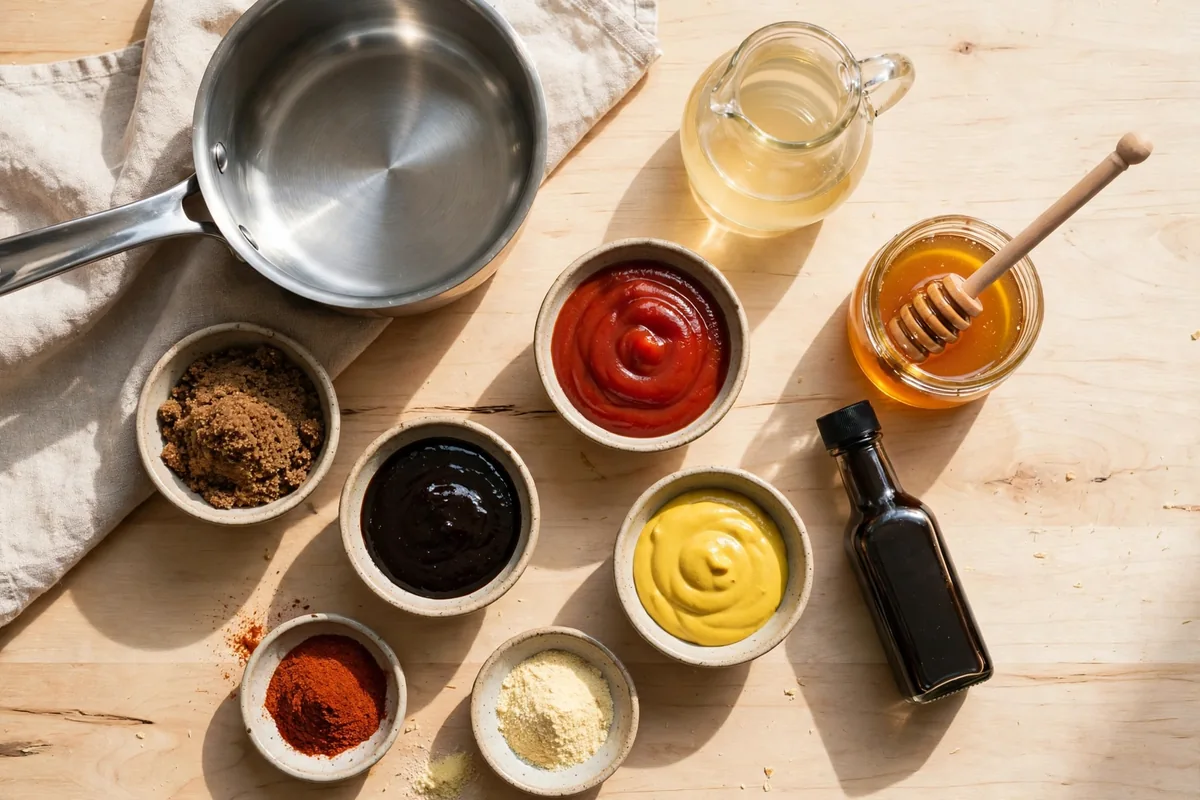
Ingredients for the Sweet Smoky Barbecue Sauce
Keep the shopping list short and use ingredients you already trust. Dark brown sugar matters more than light brown sugar here, because it gives a deeper caramel flavour and a darker colour, and apple cider vinegar gives a rounder tang than white vinegar. Smoked paprika carries the smoky note, so use smoked, not sweet or hot paprika, and use a ketchup you like the taste of on its own, because it is the base of the whole batch. If your spices have sat in the cupboard for over a year, smell them first: paprika and chili powder lose their punch with age, and a stale spice makes a flat sauce.
- 1 cup ketchup
- 2 tablespoons tomato paste (optional, for a deeper colour)
- 1/2 cup dark brown sugar, packed
- 1/4 cup apple cider vinegar
- 2 tablespoons molasses
- 2 tablespoons honey
- 1 tablespoon Worcestershire sauce
- 1 tablespoon yellow mustard
- 1 teaspoon garlic powder
- 1 teaspoon onion powder
- 1 teaspoon smoked paprika
- 1/2 teaspoon chili powder
- 1/2 teaspoon kosher salt
- 1/4 teaspoon black pepper, freshly ground
- 1/4 teaspoon cayenne pepper (optional, for heat)
- 1/2 teaspoon liquid smoke (optional, hickory)
A note on the ratio variance: published copycat versions do not agree on exact amounts, and it would be dishonest to pretend they do. Brown sugar runs from 1/3 cup in the leanest versions to 3/4 cup in the sweetest, vinegar from 3 tablespoons to 1/2 cup, and some versions use tomato paste while others skip it entirely. Honey appears in some versions and not in others, and the mustard swings from 1 tablespoon of yellow mustard to 1/2 cup in one ribs book version. My amounts sit in the middle of that range: sweet enough to glaze, tangy enough to cut through rich pork, and smoky without tasting like a campfire. If you like a sweeter sauce, add another tablespoon of honey next time. If you like it tangier, add another tablespoon of vinegar. Change one thing at a time, and write down what you liked.
How to Make the Sauce on the Stovetop Step by Step
Start with a medium saucepan and add every ingredient before you turn on the heat. Whisk until the mixture is smooth and the brown sugar lumps are gone, scraping the bottom and corners of the pan so nothing stays dry. Mixing cold means the sugar dissolves evenly once the heat is on, and you can see the colour and thickness before cooking changes them. If you are using tomato paste, whisk it in well at this stage, because it is the ingredient most likely to leave streaks.
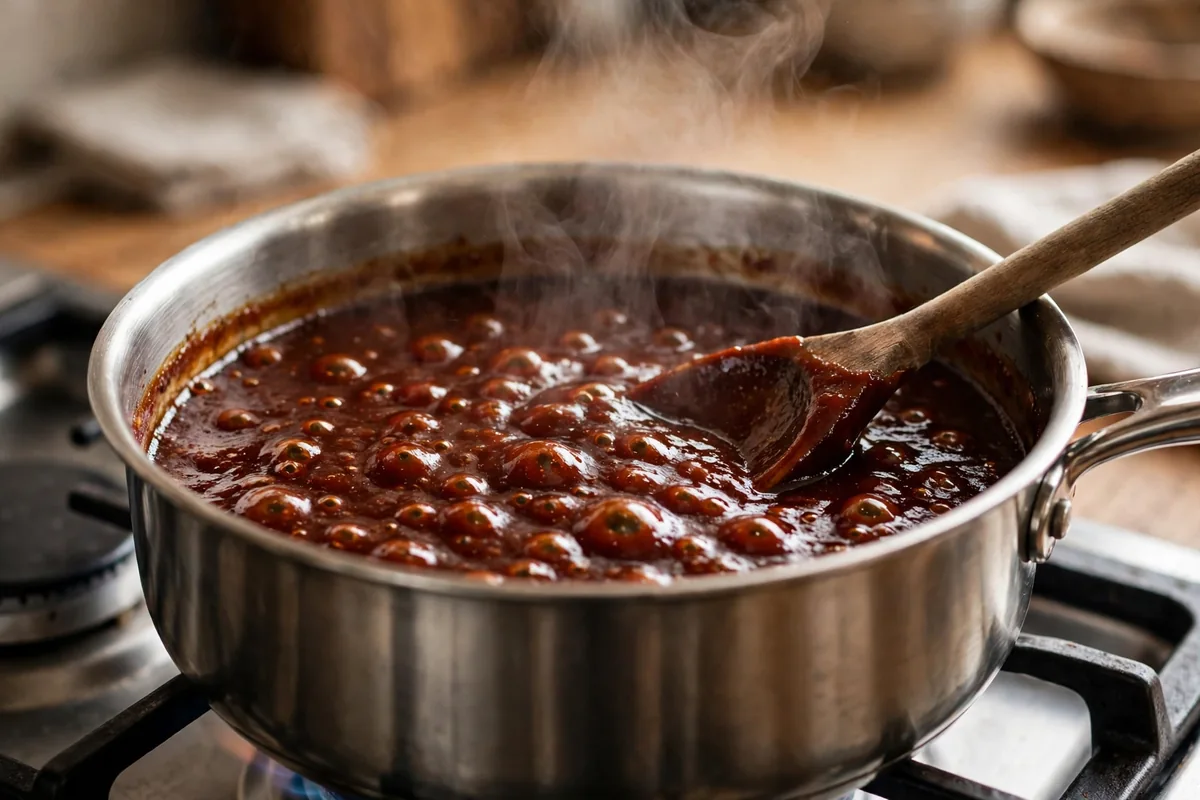
Set the pan over medium heat and bring the sauce to a gentle simmer, stirring often. As soon as it starts to bubble, turn the heat down to low and keep it at a lazy simmer, uncovered, for 15 to 20 minutes. Stir every couple of minutes, and keep the heat low enough that the sauce bubbles gently rather than spitting, because hot sauce splatters and burns fast. The sauce will darken to a rich mahogany colour and thicken as the water cooks off, which is exactly what you want for a glaze that clings to ribs.
Simmer Low and Stir Often Until It Coats a Spoon
Test the sauce with the back of a spoon: dip it in, lift it out, and run a finger through the coating. If the line holds and the sauce does not run straight back together, it is ready. If it still runs thin, give it another 5 minutes on low heat and test again. Take the pan off the heat and let the sauce cool for about 10 minutes, because it thickens further as it cools, and a sauce that looks perfect hot can turn too thick in the jar.
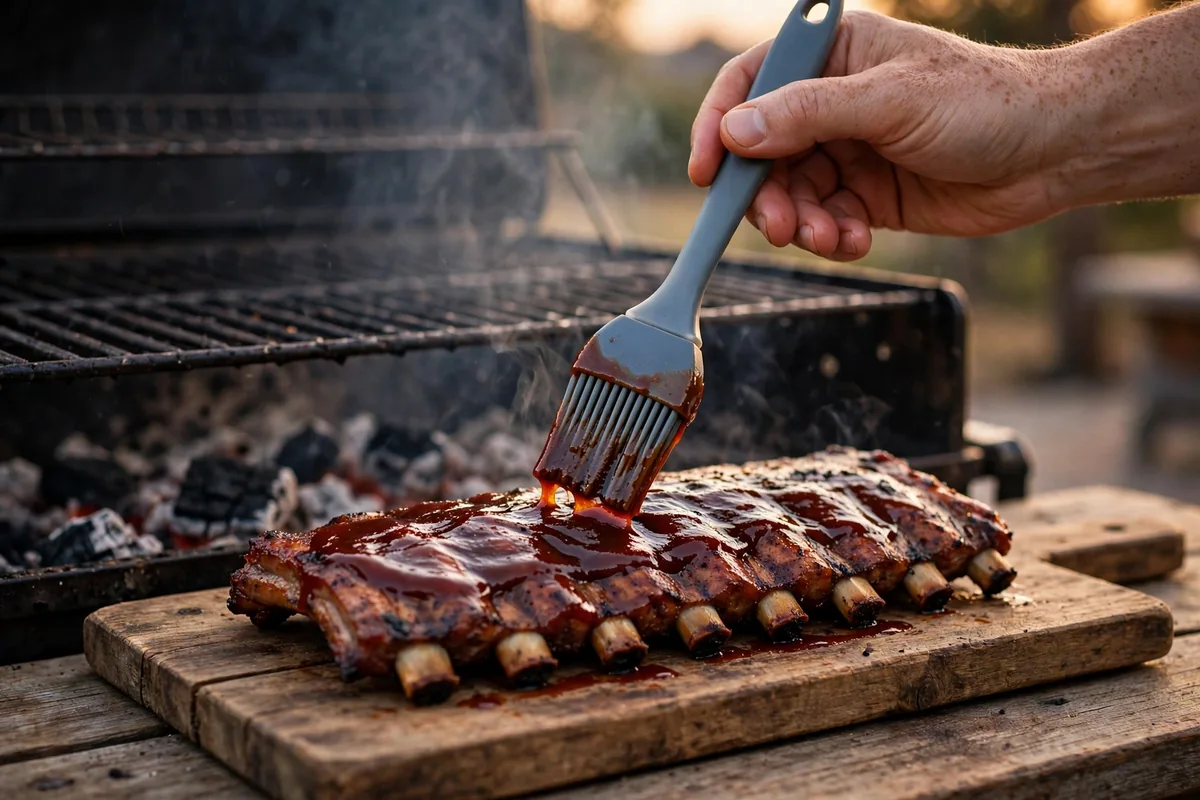
Taste the cooled sauce and adjust it before you jar it. Too sweet means another teaspoon of vinegar, too sharp means another teaspoon of honey, and too mild means another pinch of cayenne or smoked paprika. Use the sauce warm for brushing, because warm sauce spreads in a thin, even coat, while cold sauce sits in thick streaks. Brush it onto ribs or pulled pork in the last 5 to 10 minutes of cooking only, so the sugar caramelises instead of burning, and serve extra sauce on the side for dipping.
Best Uses and Easy Variations
This Texas Roadhouse BBQ sauce for ribs is the best match for the dish it was built for: brush it over baby back ribs or St Louis style ribs in the last minutes on the grill, and it turns sticky, shiny, and lightly charred at the edges. It is just as good as a homemade BBQ sauce for pulled pork, tossed through shredded pork shoulder or spooned over a pulled pork sandwich with coleslaw. It also works on grilled chicken thighs, burgers, and meatloaf glaze, and as a dipping sauce for chicken tenders and fries, though I use a lighter hand on chicken, where the sweetness can take over fast.
The base recipe is easy to bend without breaking it. For a spicier sauce, double the cayenne or add a teaspoon of chipotle powder for a smoky burn. For a smokier sauce, add another 1/2 teaspoon of liquid smoke, or a tablespoon of finely chopped chipotle in adobo. For a tangier sauce, add another tablespoon of apple cider vinegar after cooking, and for a sweeter sauce, add another tablespoon of honey. For a smoother sauce, blend the finished sauce for 30 seconds once it has cooled a little. Start with one change at a time, taste, and write down the version your table liked best.
Storage, Make Ahead, and Freezing
Let the sauce cool fully, then pour it into a clean glass jar with a tight lid and keep it in the fridge for up to 2 weeks. Published versions quote anywhere from 2 weeks to 1 month, so I use 2 weeks to be safe, and I label the jar with the date I made it. Stir the sauce before each use, because the spices settle to the bottom, and throw it out if you see mould, or if it smells sour or off. Do not leave the jar open on the counter, and do not dip a used brush back into the jar, because crumbs and meat juices shorten its life.
Make the sauce ahead for a cookout, because it tastes better the next day, once the flavours have had a night to settle together. It also freezes well for up to 3 months: pour it into small containers or freezer bags in half cup portions, label them, and thaw overnight in the fridge before use. Reheat gently in a small pan over low heat, stirring often, and add a splash of water if it has thickened too much in the freezer. A double batch made on a quiet Sunday can cover two weekends of grilling.
Restaurant Version Against This Home Copycat
The restaurant sauce and this home version share the same idea, but they are not the same sauce, and it helps to say that plainly. The restaurant version is made in bulk, simmered long, and served with ribs in a restaurant portion. The home version gives you control the restaurant cannot: sweeter or tangier, spicier or milder, more smoke or none at all, and a jar sized for your own table. It also gives you work the restaurant does not: measuring sixteen ingredients, twenty minutes at the stove, and washing a sticky saucepan afterwards.
If you want zero effort, order the restaurant ribs and enjoy the sauce as it comes. If you grill often, a jar of this sauce in the fridge pays for itself in a week, because it turns plain grilled chicken, pork chops, and burgers into a steakhouse style dinner with one brush stroke. Either way, the thing that makes barbecue sauce great is the same in both kitchens: a balance of sweet, tangy, and smoky, and enough patience to let it simmer until it coats a spoon.
What ingredients go into this sauce?
This copycat Texas Roadhouse BBQ sauce recipe starts with 1 cup ketchup, 1/2 cup dark brown sugar, 1/4 cup apple cider vinegar, 2 tablespoons each molasses and honey, 1 tablespoon each Worcestershire sauce and yellow mustard, and a spice blend of garlic powder, onion powder, smoked paprika, chili powder, salt, pepper, and optional cayenne and liquid smoke. It is a home reconstruction, not the official restaurant sauce, and the amounts sit in the middle of the range published copycat versions use.
How long should I simmer the sauce?
Simmer the sauce uncovered on low heat for 15 to 20 minutes, stirring often, until it thickens enough to coat the back of a spoon. Published copycat versions agree on this range, with most quoting 15 to 20 minutes, and a few going as short as 10 minutes. If it still runs thin, give it another 5 minutes and test again, and remember it thickens further as it cools.
Can I make it spicier or milder?
Yes. For a spicier sauce, double the cayenne to 1/2 teaspoon or add a teaspoon of chipotle powder. For a milder sauce, leave the cayenne out entirely and keep the chili powder at 1/2 teaspoon. Taste after cooking and adjust, because heat builds as the sauce sits, and a sauce that tastes mild hot can taste warmer the next day.
How long does homemade BBQ sauce keep in the fridge?
This sauce keeps for up to 2 weeks in a sealed jar in the fridge. Published versions quote 2 weeks to 1 month, so 2 weeks is the safe number to use. It also freezes well for up to 3 months in half cup portions. Discard it if you see mould or if it smells sour or off.
Can I use this sauce on chicken or burgers too?
Yes. It works well on grilled chicken thighs, burgers, pork chops, and meatloaf glaze, and as a dipping sauce for tenders and fries. Brush it on in the last 5 to 10 minutes of cooking so the sugar caramelises instead of burning, and use a lighter hand on chicken, where the sweetness can take over fast.
Is this the official Texas Roadhouse recipe?
No. This is a home copycat recreation inspired by the restaurant sauce, which Texas Roadhouse describes as sweet and smoky with a zesty spice finish. It is not the official recipe, and no official preparation details are claimed here.
So here is my honest take on this copycat Texas Roadhouse BBQ sauce recipe: make a double batch before your next rib cook, keep a jar in the fridge, and brush it on near the end so the sugar turns sticky instead of burnt. Taste it as it simmers, adjust the tang and heat to your own table, and write down what you liked, because the best version is the one your family asks for again. Check your location if you want the restaurant ribs instead, and enjoy whichever plate lands on your table first.
Related Texas Roadhouse Guides
Information last verified: November 13, 2026. Source: official Texas Roadhouse website, where the chain publishes menu and location information. Sauce amounts are a home reconstruction from published copycat recipes checked November 13, 2026, with ratio variance noted, so check your location before ordering the restaurant version.