Texas Roadhouse Dallas Filet vs LongHorn Flo’s Filet Compared
Texas Roadhouse Dallas Filet vs LongHorn Flo’s Filet Compared
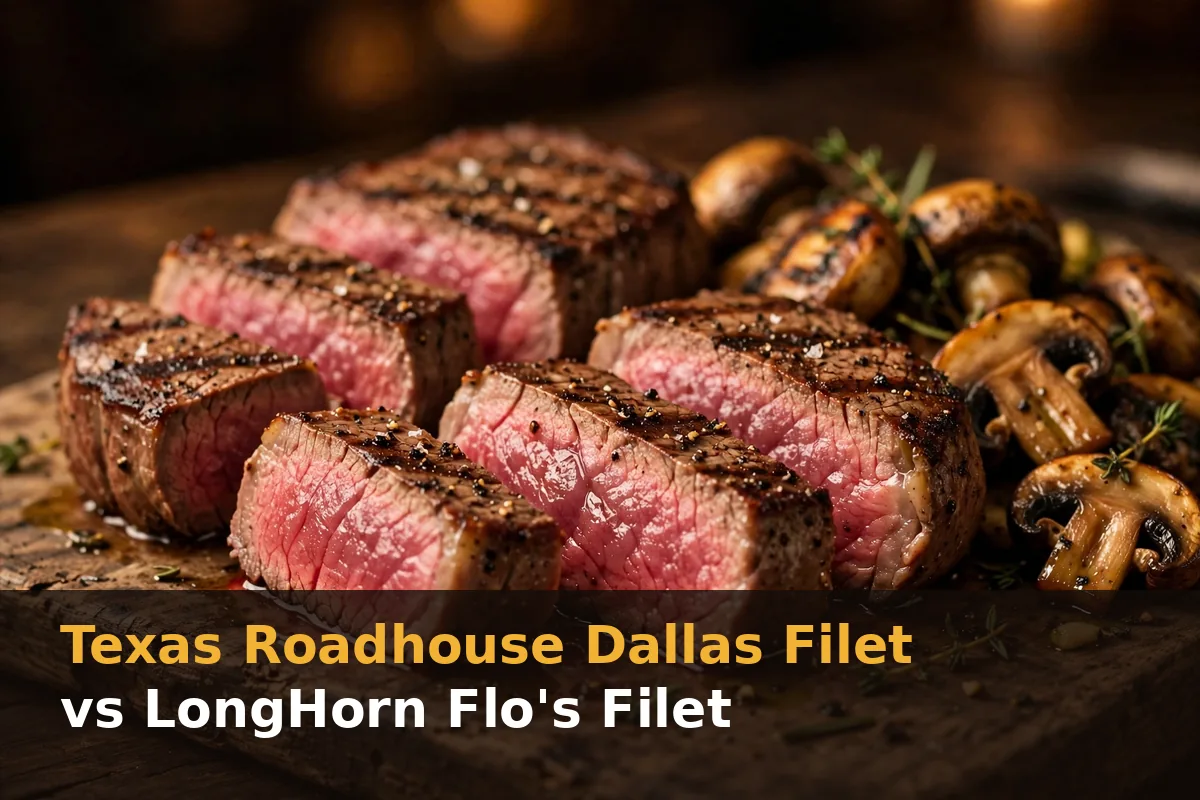
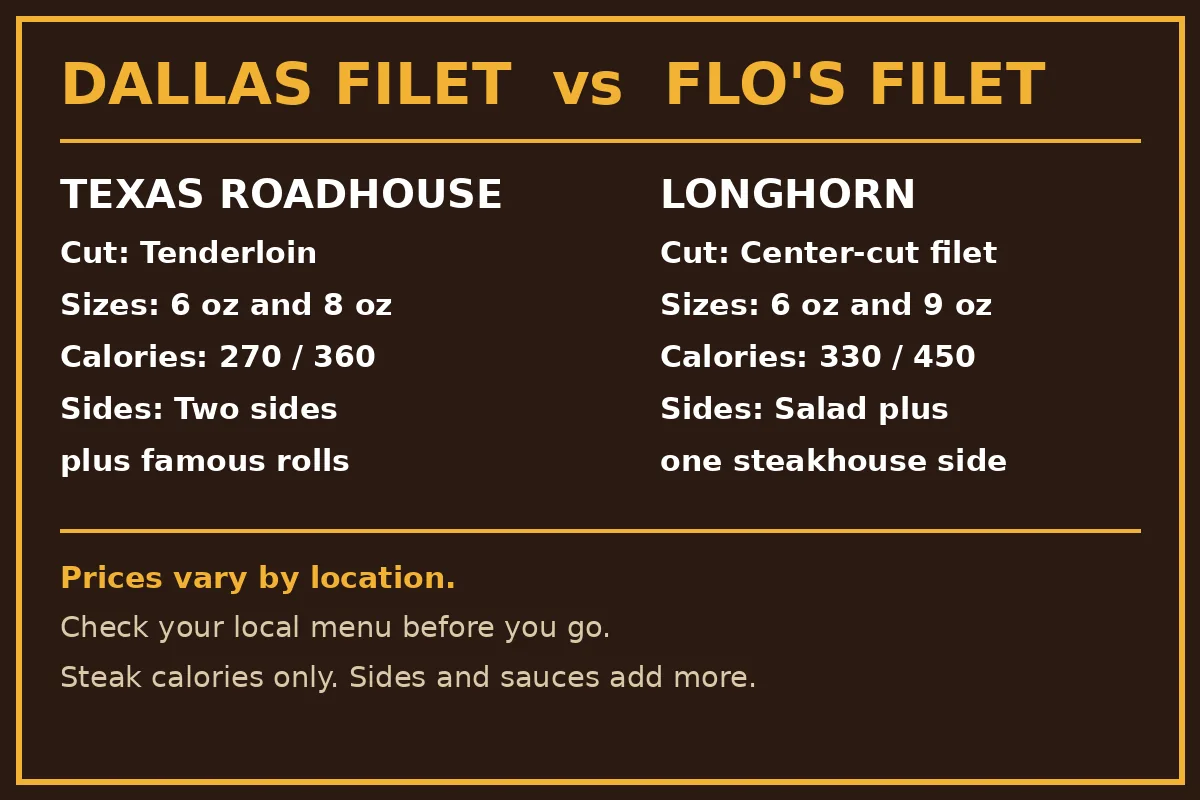
Both steaks are tenderloin, so both are tender, but they are not the same plate. The Dallas Filet is Texas Roadhouse’s hand cut tenderloin, served in 6 oz and 8 oz sizes with two sides and the famous rolls. Flo’s Filet is LongHorn’s center cut filet, served in 6 oz and 9 oz sizes with a salad and one side. If you want the bigger filet and two sides, pick Dallas. If you want the classic center cut and a salad included, pick Flo’s. Neither chain publishes one national price, so check your location’s menu before you go, because prices vary by restaurant and date. This texas roadhouse filet vs longhorn flo filet comparison covers sizes, calories, tenderness, sides and value.
I have eaten my way through enough steakhouse menus to know that a filet comparison is never really about one steak beating another. It is about which plate fits the night you are having. A filet is the leanest, most tender cut on either menu, cut from the tenderloin, with a mild beef flavor that lets the cooking and the seasoning do the talking. That is exactly why these two filets make such a good head to head: same cut family, different houses, different sizes, different sides, and different ideas of what a steak dinner should include.
One honesty note before the numbers. Steakhouse prices move by location and by date, and neither Texas Roadhouse nor LongHorn publishes a single national price for these filets. Third party menu trackers disagreed by several dollars on both steaks when I checked, so this guide gives you sizes, calories, and sides that are verifiable, and tells you plainly to check your location for the price. Any guide that hands you one exact national price for either filet is guessing, and I would rather tell you what I could verify than dress up a guess as a fact.
Dallas Filet vs Flo’s Filet: The Side by Side Numbers
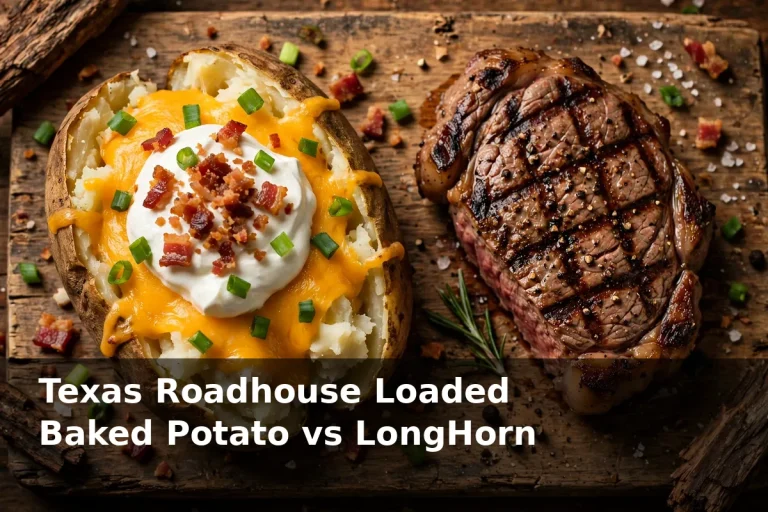
Start with the cut, because it explains everything else. The Dallas Filet is Texas Roadhouse’s tenderloin steak, hand cut fresh in house and grilled to order. Flo’s Filet is LongHorn’s center cut filet, named after Flo, a server the chain says loved the cut so much they named it for her, and grilled over an open flame. Center cut matters: it is the thickest, most even part of the tenderloin, so it cooks evenly and slices like butter. The Dallas Filet is tenderloin too, but Texas Roadhouse does not market it as center cut specifically, which is one small but real difference in how the two houses talk about the same muscle. That cut difference is why this texas roadhouse filet vs longhorn flo filet matchup matters for tenderness and price.
| Detail | Dallas Filet | Flo’s Filet |
|---|---|---|
| Cut | Tenderloin Hand cut in house, grilled to order |
Center cut tenderloin Open flame grilled |
| Sizes on the menu | 6 oz and 8 oz | 6 oz and 9 oz Older menus listed 8 oz and 10 oz, so check your location |
| Calories (steak only) | 270 cal (6 oz), 360 cal (8 oz) Chain nutrition listing |
330 cal (6 oz), 450 cal (9 oz) Current LongHorn menu listing |
| What comes with it | Two sides plus rolls | Salad plus one side LongHorn steak dinners include a salad and one steakhouse side |
| Price | Varies by location No national price published, check your local menu |
Varies by location No national price published, check your local menu |
| Best for | Two side eaters and bigger appetites | Center cut purists and salad lovers |
Read that table the way a regular would. Flo’s tops out bigger, at 9 oz against 8 oz for Dallas. What Dallas gives you instead is the second side. If you are the kind of eater who builds the plate around the sides, two sides plus rolls is a meaningfully bigger dinner than a salad plus one side, even before the steak itself. If you are a steak first eater, the 9 oz Flo’s is the bigger piece of tenderloin, and the center cut label is the detail that tends to win over filet purists.
How They Actually Taste Different
On tenderness, call it a draw with a footnote. Both are tenderloin, so both cut with almost no resistance when cooked right, and both reward medium rare. Where they split is flavor and finish. Texas Roadhouse grills its hand cut steaks over a grill with its house seasoning, and the Dallas Filet picks up a slightly bolder, seasoned crust. LongHorn grills over an open flame, which gives Flo’s Filet a touch more char and smokiness, while the filet itself stays mild and buttery. If you like your steak to taste seasoned and hearty, lean Dallas. If you like your filet to taste clean, buttery, and lightly smoky, lean Flo’s.
Doneness matters more with a filet than with a ribeye, because there is almost no fat to forgive an overcook. Order medium rare if you want the rosy center that shows off a tenderloin, and do not let a well done order sit under a heat lamp while the sides catch up. A filet cooked past medium loses the very thing you paid for, which is that soft, almost silky bite. Both restaurants will cook to order, so say the temperature plainly and send it back politely if it arrives past it. A good steakhouse expects that.
Sides, Salads, and the Full Plate
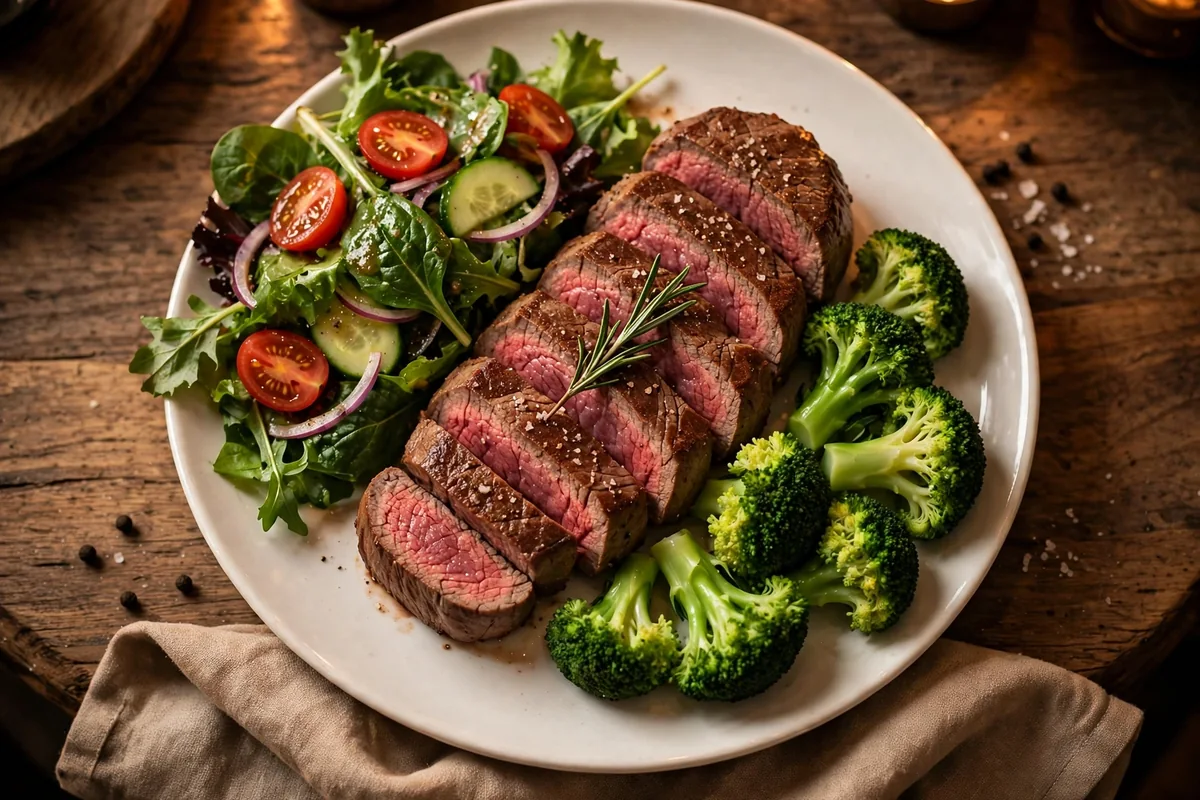
This is where the comparison stops being about steak and starts being about dinner. A Texas Roadhouse steak dinner comes with two made from scratch sides and the warm rolls with cinnamon honey butter that arrive before the meal. That is a lot of food, and it is why a Dallas Filet dinner feels like a feast even at 6 oz. LongHorn steak dinners come with a salad and one steakhouse side, which makes a Flo’s Filet dinner feel lighter and more classic steakhouse, with the salad acting as the fresh counterpoint to the rich steak.
So ask yourself what kind of eater you are tonight. Two sides plus rolls means you can pair a green vegetable with a comfort side and still have bread on the table. A salad plus one side means you pick one side carefully, and the salad does the fresh work. Neither is better in the abstract. The Dallas plate wins for groups and big appetites, and the Flo’s plate wins for a cleaner, steak forward meal where the filet is clearly the star.
Which Filet Wins on Tenderness and Flavor
If tenderness is the only test, Flo’s Filet takes it by a whisker, because the center cut is the most even, most tender section of the tenderloin, and LongHorn says so right on the menu. If flavor is the test, the Dallas Filet takes it by a whisker, because the Texas Roadhouse seasoning and grill give it a bolder crust. My honest verdict for most diners: order Flo’s if you are a filet purist chasing the softest bite, and order Dallas if you want the heartier seasoned steakhouse plate with two sides. Either way, you are eating one of the two best tenderloin values at a casual steakhouse, and the wrong choice here is still a very good steak.

How to Order Each One
At Texas Roadhouse, order the Dallas Filet by size, then pick your two sides in the same breath, so the kitchen builds the plate you actually want. Try this: I would like the 8 oz Dallas Filet, cooked medium rare, with green beans and a baked potato, and no sweet sauce, please. At LongHorn, order Flo’s Filet by size, confirm the salad dressing, and pick your one side with care, since you only get one. Try this: I would like the 9 oz Flo’s Filet, cooked medium rare, with the house salad and steamed broccoli, please.
At both places, skip the sweet sauces unless you have checked them, because a filet this mild does not need a sweet glaze, and a sugary sauce is the fastest way to hide the beef flavor you came for. Mushrooms are the one topping worth considering at either house, because they add an earthy note without covering the steak. And at both places, ask about the current sizes before you settle, because LongHorn in particular has changed Flo’s Filet sizes over the years, and an old menu in your memory may not match the menu in front of you.
How I would order: I would order the 9 oz Flo’s Filet when I want the purest filet experience, medium rare, with a salad and one green side, because the center cut at that size is the softest bite either chain sells. I would order the 8 oz Dallas Filet when I am hungry enough to want two sides and rolls beside the steak, because that plate is the better feast. If I could only pick one tonight, I would take the Flo’s for the steak itself and the Dallas for the dinner around it, and I would be happy with either plate.
What is the difference between the Dallas Filet and Flo’s Filet?
Both are tenderloin steaks, but the Dallas Filet is Texas Roadhouse’s hand cut tenderloin in 6 oz and 8 oz sizes with two sides and rolls, while Flo’s Filet is LongHorn’s center cut filet in 6 oz and 9 oz sizes with a salad and one side. Flo’s is marketed as center cut, the most even part of the tenderloin, while Dallas is marketed as a hand cut house steak. Prices vary by location at both chains, so check your local menu.
Which is more tender, Dallas Filet or Flo’s Filet?
Both are very tender, since both come from the tenderloin, the softest muscle on the steer. Flo’s Filet has a small edge on paper because it is center cut, the thickest and most even section of the tenderloin. Cooked to medium rare, either one should slice with almost no resistance, and an overcooked filet at either restaurant will lose tenderness no matter which name is on it.
How many calories are in the Dallas Filet and Flo’s Filet?
The chain nutrition listing puts the Dallas Filet at 270 calories for 6 oz and 360 calories for 8 oz, steak only, without sides. The current LongHorn menu listing puts Flo’s Filet at 330 calories for 6 oz and 450 calories for 9 oz, steak only. Sides, salads, rolls, butter, and sauces add more, so the full plate runs higher than the steak figure alone.
What sizes do the Dallas Filet and Flo’s Filet come in?
The Dallas Filet comes in 6 oz and 8 oz sizes. Flo’s Filet currently comes in 6 oz and 9 oz sizes, though older LongHorn menus listed 8 oz and 10 oz, so confirm the sizes at your location before you order. If you want the biggest filet, the 9 oz Flo’s is currently the larger top size.
How much do the Dallas Filet and Flo’s Filet cost?
Neither chain publishes one national price for these filets, and prices vary by location and date. Third party menu trackers disagreed by several dollars on both steaks, so this guide does not state a single exact price for either one. Check your location’s menu or call the restaurant for the current price before you go.
Which filet should I order, Dallas or Flo’s?
Order Flo’s Filet if you want the center cut, the softest bite, and a classic steak plus salad plate. Order the Dallas Filet if you want two sides, rolls, and a bolder seasoned crust on a bigger steakhouse feast. If you are a filet purist, pick Flo’s. If you are ordering for appetite and sides, pick Dallas. Either plate is a strong choice.
That is the whole comparison, and it comes down to a simple split: Flo’s Filet for the purest, softest center cut bite, and the Dallas Filet for the heartier, two side steakhouse feast. Same tenderloin family, different houses, different plates, and no wrong answer between them. Check your location for the current sizes and price, order it medium rare, pick sides that let the steak shine, and enjoy a filet done right. This texas roadhouse filet vs longhorn flo filet matchup ends the way most good steak debates end, with both steaks winning, just for different eaters.
Related Texas Roadhouse Guides
last verified: October 25, 2026. Source: official Texas Roadhouse website, where the chain publishes its nutrition information, with Dallas Filet figures from its nutrition listing and Flo’s Filet sizes and calories from the current LongHorn menu listing.