Are Texas Roadhouse Rolls Safe With a Peanut Allergy? Cross-Contact Facts
Are Texas Roadhouse Rolls Safe With a Peanut Allergy? Cross-Contact Facts
So, are texas roadhouse rolls safe for peanut allergy diners? Here is the honest two part answer: the rolls themselves are not listed as containing peanut, but that is not the same as safe. Texas Roadhouse serves complimentary peanuts in the same dining room, and its scratch based kitchens warn that cross-contact with allergens could occur. If your allergy is severe, do not treat a clean ingredient listing as a green light. Call the specific restaurant, tell the staff about the allergy before you order, and ask exactly what they can and cannot control that day.
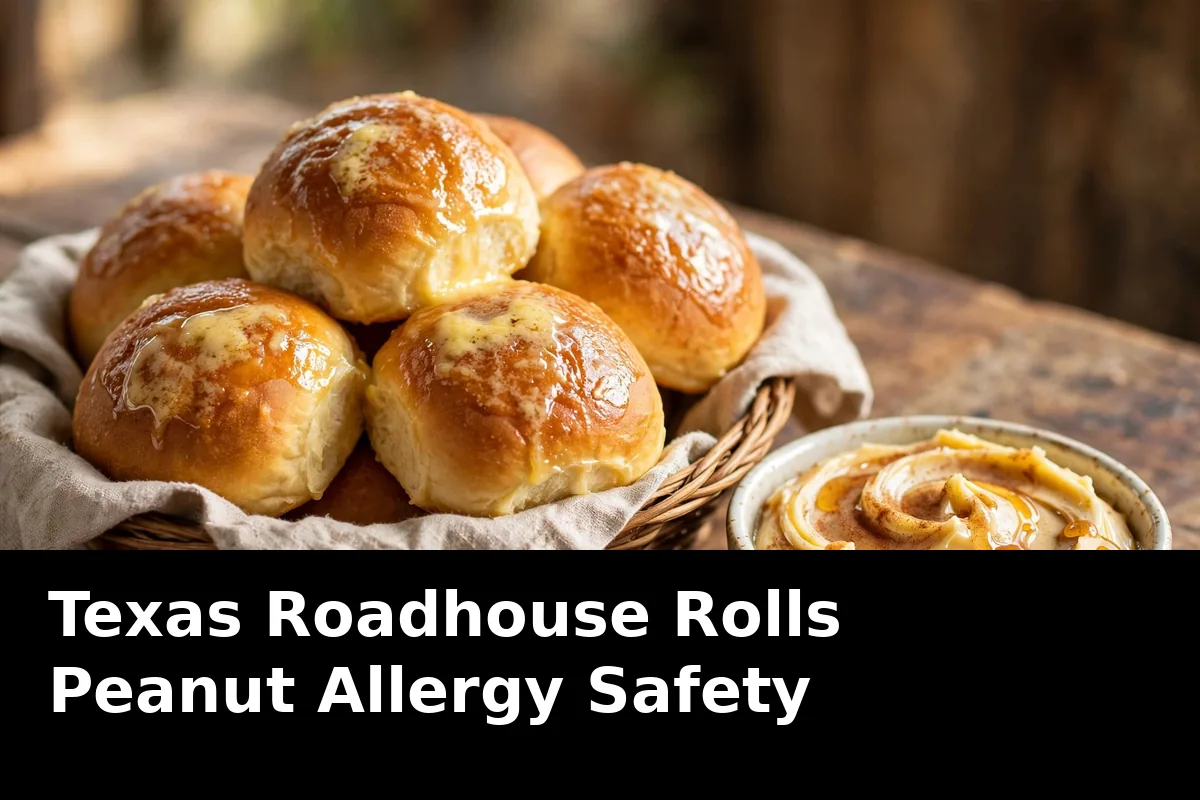
Let me paint the scene, because it is the whole problem in one basket. You sit down, the server brings a warm basket of soft rolls with sweet cinnamon butter, and somewhere nearby another table is cracking open peanuts. The rolls smell amazing, and the question is not really about the recipe. It is about the room. That is why this guide answers two questions separately, instead of mushing them into one reassuring sentence: what is actually in the rolls, and what does eating in a peanut serving restaurant mean for cross-contact?
One language note before we dig in, because it matters for an allergy guide more than for any other kind of menu article. A listing that says an item does not contain peanut is a statement about ingredients. Safety is a statement about the whole visit: the recipe, the kitchen, the table, the hands that handled the basket, and the room you sit in. Keep those two ideas apart as you read, and the rest of this guide will make sense.
Are Texas Roadhouse Rolls Safe for Peanut Allergy Diners? Two Separate Questions
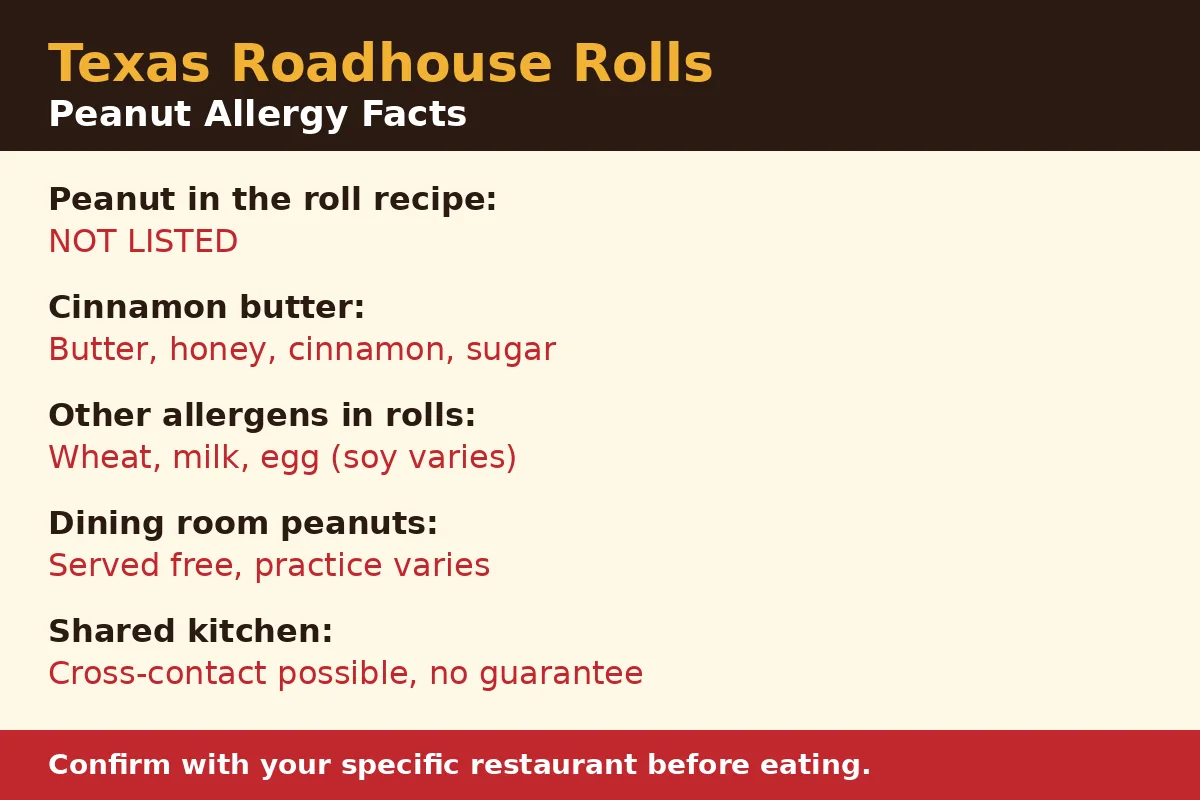
Question one is about the roll itself. The allergen listings for Texas Roadhouse rolls consistently list wheat, milk, and egg, with soy appearing in some listings and not in others. None of the listings I checked lists peanut as a roll ingredient, and the cinnamon butter is described as butter, honey, cinnamon, and sugar. Question two is about everything around the roll. Peanuts are a complimentary item in the dining room, the kitchen is shared and scratch based, and the chain itself warns that cross-contact could occur in preparation. A roll can pass question one and still fail question two for a person whose allergy reacts to trace contact.
| Question | What the listing and practice show | What it means for you |
|---|---|---|
| Do the rolls contain peanut? | Not listed | Peanut is not listed as a roll ingredient in the allergen listings checked |
| Does the cinnamon butter contain peanut? | Not listed | Described as butter, honey, cinnamon, and sugar, with no peanut listed |
| Do the rolls contain other allergens? | Yes | Wheat, milk, and egg are listed; soy varies by listing, so confirm it locally |
| Are peanuts present in the restaurant? | Yes | Complimentary peanuts are served in the dining room, in a format that varies by location |
| Can the restaurant guarantee no cross-contact? | No | Shared scratch based kitchen, so the chain warns cross-contact could occur |

What the Allergen Listing Says About the Rolls Themselves
Start with the recipe, because this is the part that looks reassuring and, on its own terms, it is. Texas Roadhouse rolls are a wheat flour yeast roll, served warm and brushed with butter, with cinnamon honey butter on the side. The allergen listings agree on the big three: wheat from the flour, milk from butter and milk in the dough, and egg. That already rules the rolls out for anyone with a wheat, milk, or egg allergy, whatever the peanut question turns out to be.
Soy is where the listings wobble, and I am flagging it rather than smoothing it over. Some allergen guides list soy for the rolls, others do not, which likely reflects oil or additive differences between listings and locations. If soy matters to you, that variation alone is a reason to ask the restaurant for its current listing instead of trusting any single article, including this one. The same caution applies to the roll recipe itself: recipes and suppliers change, and a listing dated August 27, 2026 is current as of this writing, not a promise for next year.
What about peanut oil? The roll listing itself shows no peanut, and the rolls are baked, not fried, so fryer oil is not a roll ingredient question. Secondary guides disagree about fryer oil elsewhere in the kitchen, with some saying the chain does not cook with peanut oil and others claiming fried items use it. That disagreement does not change the roll answer, but it does matter if you order fried items alongside your rolls, so ask about fried items separately if they are on your table. Do not let a confident claim about one part of the kitchen stand in for the whole kitchen.
Cross-Contact Reality: Peanuts in the Same Dining Room
Now the harder part. Texas Roadhouse built part of its identity on complimentary peanuts, and while the format has changed, the peanuts have not gone away. Many locations now serve peanuts in sealed bags rather than open barrels, a change that came after the pandemic, while other locations still offer them in barrels and some only hand them out on request. Sealed bags cut down on loose shells and shared handfuls, which is a real improvement for table hygiene, but a sealed bag on a neighboring table is still peanuts in the room, handled by guests and staff, with shells and residue that travel on hands, tables, and trays.
The kitchen side is just as important. Texas Roadhouse describes itself as a scratch based concept and warns that cross-contact with allergens could occur in the preparation process. There is no dedicated peanut free kitchen, no peanut free menu, and no guarantee that any item is completely allergen free. That warning is not boilerplate to skip past. It means the same surfaces, utensils, and hands that move through a peanut serving restaurant also move through your order, and the restaurant cannot promise that chain is broken just because the roll recipe itself contains no peanut.
How much that matters depends on the person, and this is where an article must stop pretending it can decide for you. Someone with a mild sensitivity who reacts only to eating peanut itself faces a different risk picture from someone who reacts to skin contact or to airborne exposure, and even that picture depends on the specific restaurant that day: how peanuts are served there, how tables are cleaned between guests, and how seriously the staff on that shift take the allergy note. This guide cannot measure your sensitivity, and it will not rank your risk for you. If your allergy is severe, talk it through with your own clinician and with the restaurant manager before you decide, because both of them know things this article cannot.
How to Ask for a Peanut Safer Table
If you decide to go, do the asking before you sit down, not after the basket arrives. Call ahead and ask the manager three things: how are peanuts served at this location, can you be seated at a table where no peanuts are served and the table is cleaned first, and what does the kitchen do differently for an allergy order? At the table, repeat the allergy to your server before ordering, ask for no peanuts at your table, and ask whether the basket and butter can be handled with fresh utensils. None of this makes a shared peanut serving restaurant peanut free, and a straight answer that includes “we cannot guarantee that” is more useful than a breezy reassurance. Take the straight answer seriously.

Who Should Think Twice, and What to Do Instead
Think twice about dining in if your allergy has ever involved contact reactions, breathing difficulty, or anaphylaxis, or if you are unsure how you react to trace exposure. Several allergy focused guides take the blunt view that a restaurant serving peanuts in the dining room is not a good fit for severe peanut allergy, and that blunt view deserves respect even though this article will not turn it into a medical order for you. The risk is not only the roll. It is the table, the shared condiments, the server who just cleared a peanut table, and the child at the next table cracking shells. A takeout order skips the dining room part of that picture, but it does not skip the shared kitchen, so takeout is a smaller exposure, not a clean one.
- Ask for the current allergen listing at that restaurant, not just the online one, and check the roll line yourself.
- Say the allergy before ordering, and ask the server to confirm it with the kitchen and the manager.
- Ask for no peanuts at your table and a cleaned table, and accept that earlier guests may still have left residue behind.
- Skip fried items unless you have asked about the fryer, because secondary guides disagree about fryer oil.
- Skip the rolls entirely if the answers are vague, because a vague answer is itself information.
- Remember the other allergens too: wheat, milk, and egg are in the rolls regardless of the peanut answer.
How I would handle it: I would call the restaurant before going, ask how peanuts are served there, and ask for a cleaned table with no peanuts. At the table I would tell the server about the allergy before anyone orders, and I would only eat a roll if the manager gave me a clear, specific answer about that kitchen that day. If the answer was vague or rushed, I would skip the basket and order a plain grilled item instead, or I would eat somewhere else. A warm roll is never worth a guessing game.
Are texas roadhouse rolls safe for peanut allergy sufferers?
The rolls themselves are not listed as containing peanut, but the restaurant serves complimentary peanuts in the dining room and uses a shared scratch based kitchen where cross-contact could occur. That combination means the rolls cannot be called safe for a peanut allergy in general. People with severe allergies should confirm with the specific restaurant and their own clinician before eating there.
Do Texas Roadhouse rolls contain peanut oil?
The roll listing shows no peanut, and the rolls are baked, not fried, so peanut oil is not a roll ingredient. Secondary guides disagree about fryer oil used for other fried items, so if you order anything fried, ask the restaurant about its fryer separately. Do not assume a roll answer covers the fryer.
Can I ask for a table with no peanuts?
Yes, you can ask, and calling ahead gives the restaurant the best chance to arrange it. Ask for a table where no peanuts are served and for the table to be cleaned first. The restaurant cannot guarantee the table was never exposed earlier in the day, so treat this as risk reduction, not a peanut free guarantee.
Are sealed bag peanuts safer than open barrels?
Sealed bags reduce loose shells and shared handling compared with open barrels, which helps table hygiene. They do not remove peanuts from the room, and they do not change the shared kitchen. A sealed bag format is better than an open barrel, but it is not the same as a peanut free restaurant.
What other allergens are in Texas Roadhouse rolls?
Wheat, milk, and egg are listed for the rolls. Soy appears in some listings and not in others, so confirm soy with the specific restaurant if it matters to you. The cinnamon butter is described as butter, honey, cinnamon, and sugar, with no peanut listed.
What should I say to the server about a peanut allergy?
Tell the server about the allergy before ordering, ask for no peanuts at your table, and ask the server to confirm the allergy with the kitchen and the manager. Ask how peanuts are served at that location, whether the table can be cleaned first, and what the kitchen does differently for allergy orders. If the answers are vague, skip the rolls.
So, are texas roadhouse rolls safe for peanut allergy diners? The recipe answer is no peanut listed, and the room answer is peanuts served in the dining room, a shared scratch based kitchen, and no guarantee against cross-contact. Those two answers together are the whole story: a clean ingredient listing does not make a peanut serving restaurant safe, and a peanut serving restaurant does not make every roll contaminated either. It makes the decision a personal one, based on your allergy, that restaurant, and that day. Call ahead, ask specific questions, listen to straight answers, and skip the basket whenever the answers leave you guessing.
Related Texas Roadhouse Guides
last verified: October 24, 2026. Source: official Texas Roadhouse website, where the chain publishes its nutrition and allergen information, with item allergen detail compiled from its Nutritionix allergen listing last updated August 27, 2026.