Texas Roadhouse With a Peanut Allergy: Safe-Table Requests and Reality
Texas Roadhouse With a Peanut Allergy: Safe-Table Requests and Reality
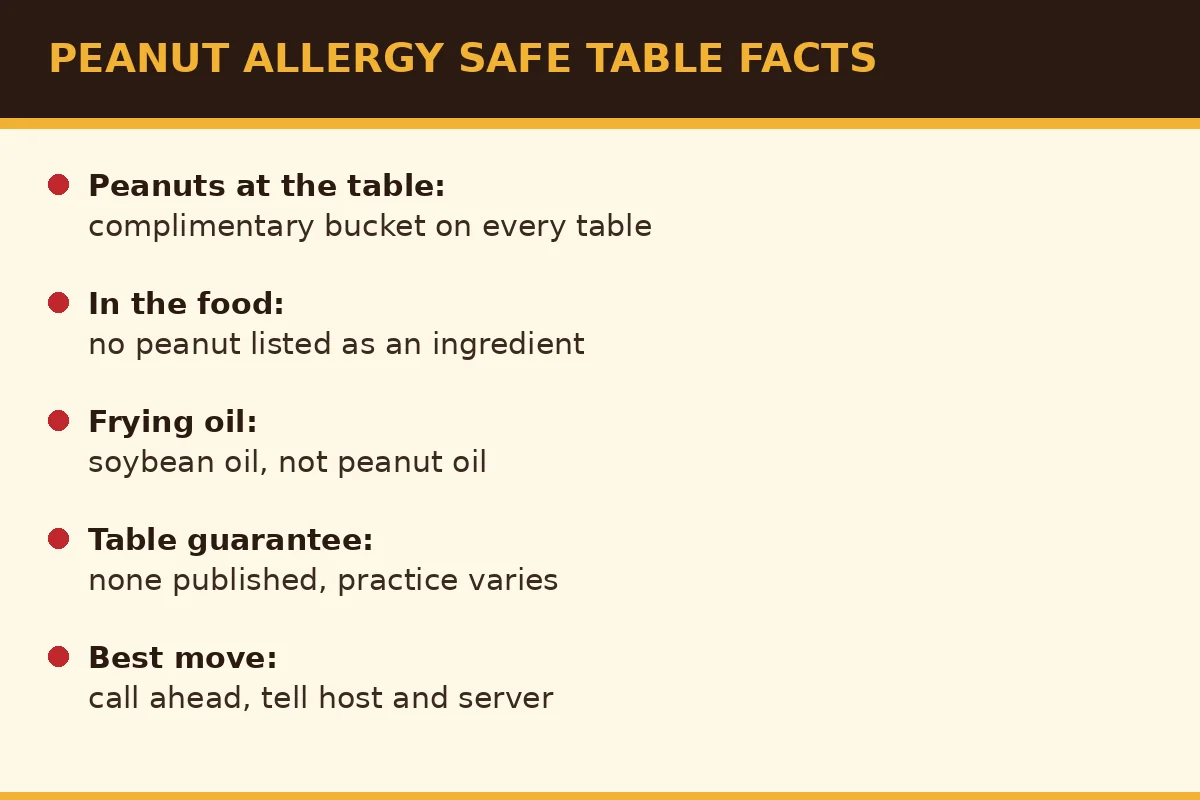
This texas roadhouse peanut allergy safe table request guide starts with the honest headline: Texas Roadhouse serves complimentary peanuts at the table, so the room itself is part of the allergy picture, but the menu dishes are listed without peanut as an ingredient, and the frying oil is soybean oil, not peanut oil. What you can do is ask: no peanut bucket at your table, a wiped table, fresh utensils, and a word with the kitchen. What nobody can give you is a published peanut-free table guarantee, because the chain publishes none, and practice varies by location. Call ahead and confirm with the specific restaurant before you go.
I will be straight with you, because this is the one Texas Roadhouse topic where a cheerful answer would be the wrong answer. The peanuts are not a side note here. They are the signature welcome: a bucket on the table, shells and peanut dust as part of the room, and guests all around you cracking away while you wait for your steak. That does not automatically end the visit, but it does change what a careful visit looks like. The food side of the story is actually reassuring, because the allergen listing shows no peanut ingredient in the regular dishes. The room side is where the caution lives, and this guide keeps those two sides separate so you can judge them honestly.
One language note before we dig in, because it matters. Texas Roadhouse publishes allergen information and warns that it is a scratch-based concept where cross-contact with allergens could occur in the preparation process. That is why this article says listed without peanut, never peanut-free, and why every request below is framed as something to ask for, not something promised. The lists below follow the chain’s published allergen listing as compiled from its nutrition and allergen pages, and I flag every place where you must confirm at your own location because recipes and practice change.
Texas Roadhouse Peanut Allergy Safe Table Requests: What to Ask For
That is the heart of a texas roadhouse peanut allergy safe table request: a short, specific conversation at the host stand and again with your server, before any food is ordered. Tell them about the peanut allergy on arrival, not after the bucket lands on your table. Ask that no peanut bucket be placed at your table. Ask staff to wipe down the table and the seating area before you sit down. Ask for fresh utensils, and ask that the kitchen be told about the allergy so your dishes are handled with that in mind. Each of these is a reasonable request, and staff are trained to handle allergy conversations, but each one is still a request: whether a given location can meet it, and how thoroughly, is something only that restaurant can confirm.
| Request to make | What it means in practice | |
|---|---|---|
| Call ahead and speak to a manager | Ask first | Confirm how that location handles peanut allergy tables that day; practice varies by location and by shift |
| No peanut bucket at your table | Ask on arrival | The simplest and most useful request; it removes the closest source of shells and dust from your own table |
| Table and seating wiped down | Ask on arrival | Clears shells and residue left by the previous party; ask before you sit down, not after |
| Fresh utensils and kitchen notice | Ask your server | Fresh utensils plus a kitchen heads-up reduce contact risk, but shared surfaces mean it is not a guarantee |
| Simple dishes, plain sides | When ordering | Grilled protein plus plain sides keeps the order easy for the kitchen to build cleanly |
The order of these requests matters. Calling ahead is the one that saves a wasted trip, because it is the only step that happens before you are already seated in a peanut room. If the manager sounds unsure, or says they cannot hold a bucket-free table, that is useful information, not a failed call. You have learned what you need before anyone in your party is hungry and seated.
What the Allergen Listing Says About Peanut in the Food
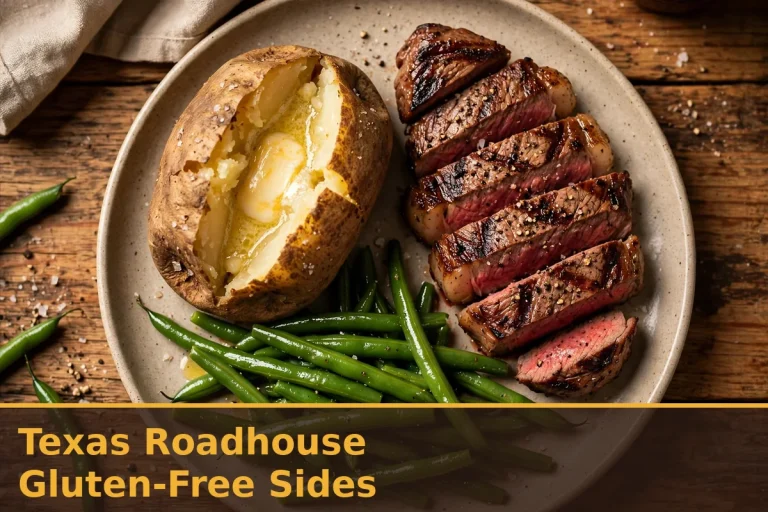
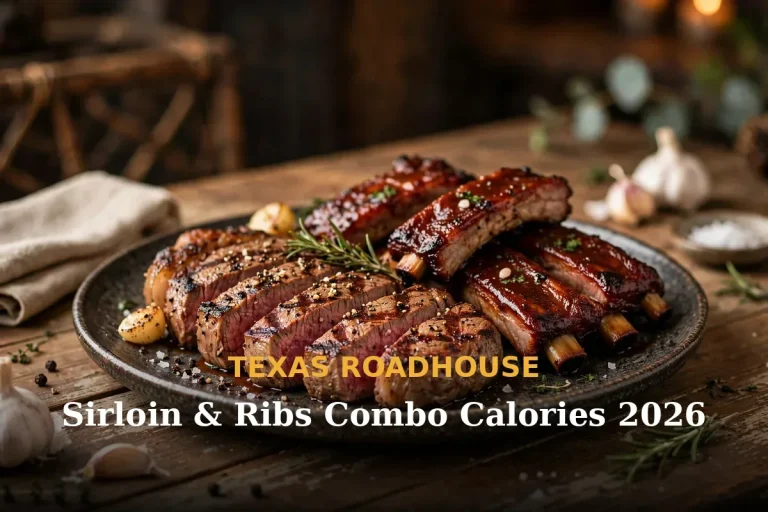
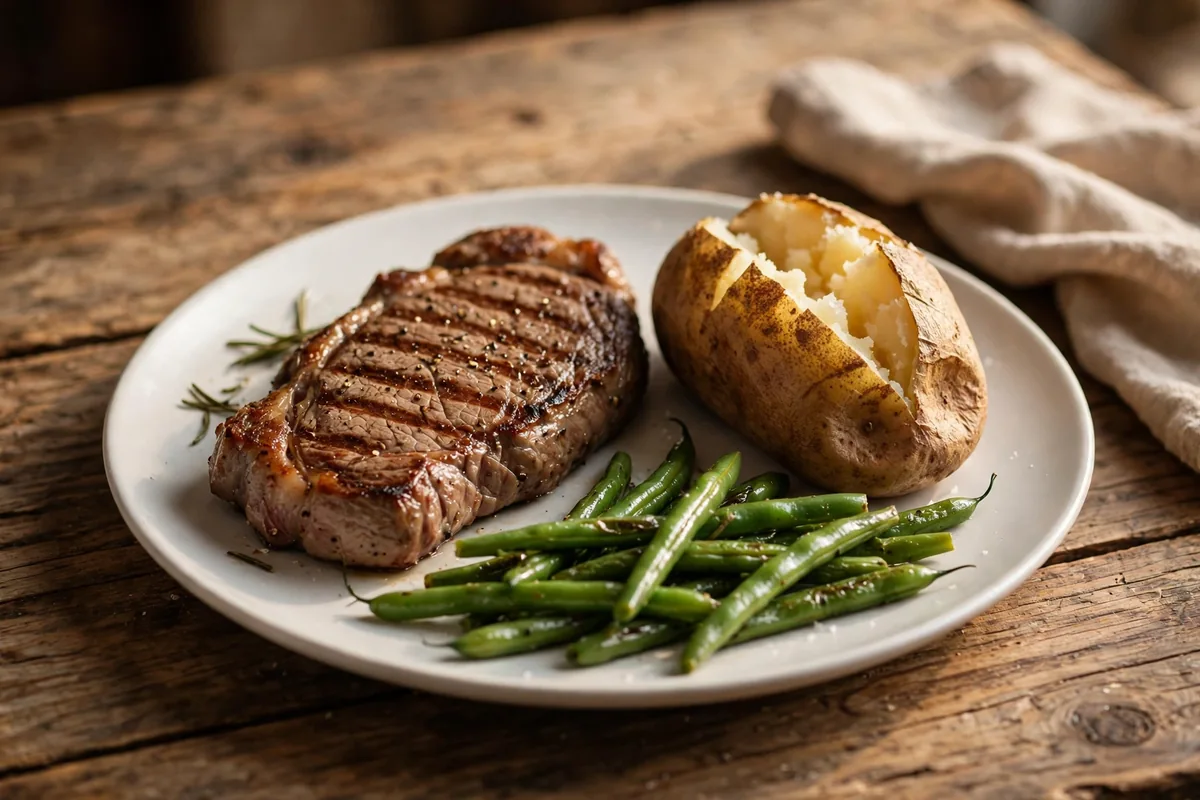
Here is the reassuring half of the story, stated carefully. The allergen listing for Texas Roadhouse shows peanuts as the table snack, not as an ingredient in the regular dishes. Grilled steaks, Fall-off-the-Bone Ribs, grilled salmon, grilled BBQ chicken, and grilled shrimp are listed without peanut. The plain sides are listed the same way: baked potato, sweet potato, green beans, applesauce, steamed broccoli, and fresh vegetables. The chain does not cook in peanut oil; the frying oil is soybean oil, which matters for the fried items but does not remove the shared fryer question below. Desserts on the current listing, including the Big Ol Brownie, are listed without peanut as an ingredient, though they carry milk, egg, wheat, and soy, so dessert is a separate allergy conversation, not a free pass.
| Group listed without peanut | Examples | |
|---|---|---|
| Grilled proteins | Listed | Hand-cut steaks, Fall-off-the-Bone Ribs, grilled salmon, grilled BBQ chicken, grilled shrimp |
| Plain sides | Listed | Baked potato, sweet potato, green beans, applesauce, steamed broccoli, fresh vegetables |
| Desserts on the listing | Listed | Big Ol Brownie, Granny’s Apple Classic, Strawberry Cheesecake: listed without peanut, but with milk, egg, wheat, and soy |
| Frying oil | Listed | Soybean oil, not peanut oil, for frying |
| Not on the regular menu | Check | No peanut sauce, peanut topping, or peanut dessert appears on the chain’s regular menu; if a server names one, ask them to check the current listing |
Two cautions belong right beside that table. First, listed without peanut is an ingredient statement, not a safety promise: a dish with no peanut in its recipe can still meet peanut in a shared kitchen, which is the next section. Second, listings change and recipes vary by location, so treat this table as your starting question list for the server, not as a printout to wave at the table. Ask about your exact dishes, every visit.
Cross-Contact Reality: Shells, Dust, and Shared Kitchens
This is the section that decides the visit for many peanut-allergic guests, so read it slowly. The dining room is a peanut room: buckets on tables, shells and crumbs where guests have been eating, and peanut dust in the air around those tables. A wiped table helps your own table, but it does not change the room, the tables next to you, or the floor under them. In the kitchen, Texas Roadhouse is a scratch-based kitchen, not an allergen-controlled kitchen, and the chain itself warns that cross-contact could occur in the preparation process. Shared grills, shared prep surfaces, shared utensils, and shared fryers mean a listed dish can still meet peanut on its way to your plate, even when peanut is nowhere in its recipe.
That does not mean the food side is hopeless. It means the food conversation and the room conversation are two different risk conversations, and a guest who is comfortable with one may not be comfortable with the other. Someone whose allergy is triggered by eating peanut faces a different picture from someone who reacts to airborne or contact exposure in a peanut room, and only the guest, knowing their own allergy, can weigh that picture. This guide cannot weigh it for you, and it will not pretend the room problem away with a clean-plate story.
How I would handle the visit: I would call the restaurant first and ask the manager, plainly, how they handle a peanut allergy table that day. On arrival I would repeat it to the host and the server, ask for no bucket and a wiped table, order the simplest grilled plate with plain sides, and ask for fresh utensils. Then I would ask one question before the food comes out: was the kitchen told, and was this built with fresh utensils? If any answer sounds unsure, I would treat that as the answer and decide accordingly.
Building a Peanut Allergy Safe Table Meal, Course by Course
Starter: this is the thinnest part of the menu for a peanut-allergic guest, not because starters list peanut, but because almost every starter is breaded or fried and comes out of the shared fryer world. If you want a starter at all, ask your server what the kitchen can build simply, and be ready to skip it and put the money toward a better cut of steak. Main: any grilled steak, ribs, grilled salmon, or grilled BBQ chicken, with plain sides like a baked potato, sweet potato, green beans, or steamed broccoli, ordered plain. Drink: stick to plain drinks and confirm any mixer with your server. Dessert: ask at the restaurant, because the listing shows no peanut in the desserts but the shared kitchen question still applies, and guessing on dessert is how a careful meal ends badly.
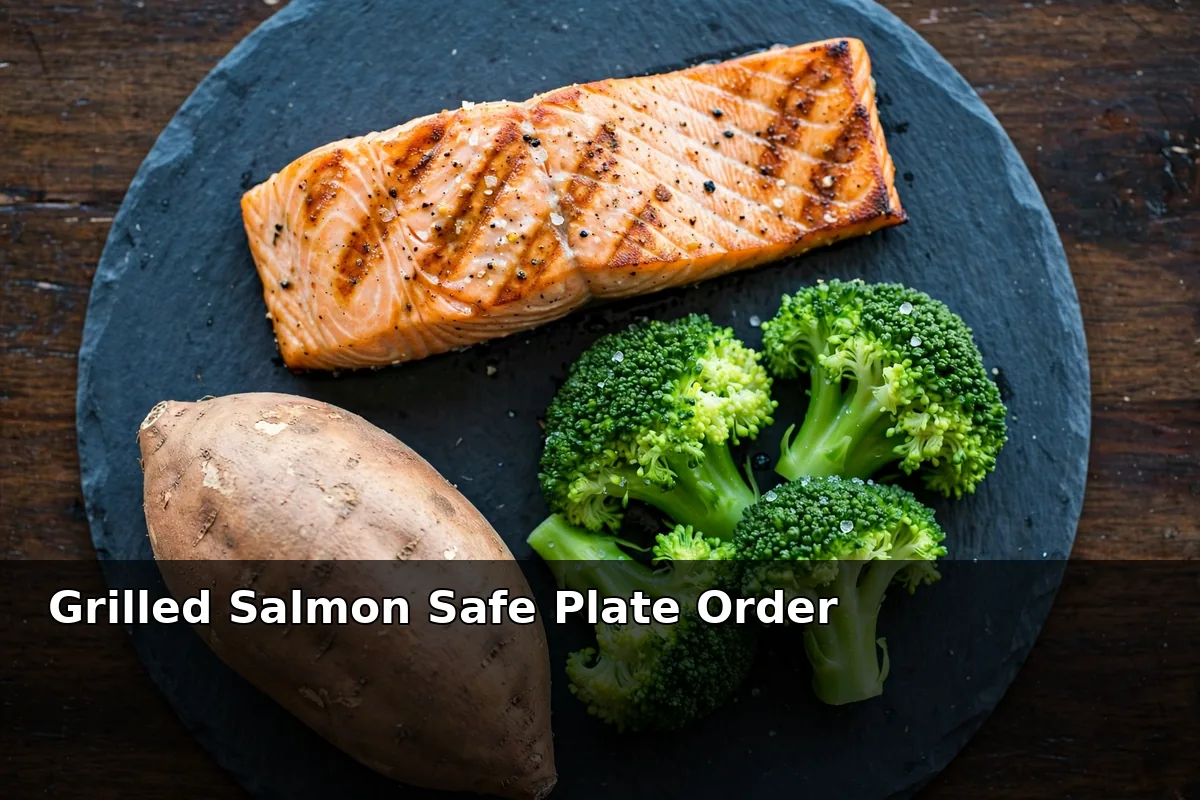
Grilled Salmon Safe Plate Order
Order it like this: grilled salmon, plain sweet potato, steamed broccoli, no sauces you have not asked about, and the allergy notice repeated to the server when you order. The salmon plate is the lightest version of the safe-table meal, and it works because every part of it is simple: one grilled protein, two plain sides, nothing breaded, nothing fried, nothing sauced. Say the order slowly, confirm the sides are plain, and confirm the kitchen was told, before the plate leaves the kitchen.
What Cannot Be Guaranteed, and Why That Sentence Matters
Texas Roadhouse publishes no peanut-free table guarantee, and that absence is the most important fact in this guide. No request in the first section can turn a peanut room into a peanut-free room, and no server can promise what the tables around you, the air in the room, or a shared grill will do. Staff can hold your bucket, wipe your table, use fresh utensils, and tell the kitchen, and those steps genuinely lower contact risk at your own table. What they cannot do is certify the room, the surfaces, or the shared equipment around that table. If a guide tells you otherwise, it is selling you comfort, not information.
- No peanut bucket at your table: a request you can make, not a room-wide change; nearby tables still have theirs.
- A wiped table: helps your table only; it does not clean the room, the floor, or the next table over.
- Fresh utensils and a kitchen notice: lower contact risk for your dishes; they do not change shared grills, fryers, or prep surfaces.
- A listed dish: an ingredient statement, not a safety promise; cross-contact in a scratch kitchen is still possible.
- A good visit last time: useful experience, not a guarantee; staff, shifts, and practice vary by visit.
If you want one rule for the whole topic, here it is: ask for everything reasonable, believe only what the specific restaurant confirms that day, and treat the room itself as part of the decision, not just the plate. That rule would have saved most of the bad visits I have heard about, because most of them started with a guest who checked the menu but never considered the bucket.
What is a texas roadhouse peanut allergy safe table request?
It is the set of requests a peanut-allergic guest makes before ordering: call ahead and speak to a manager, tell the host and server about the allergy on arrival, ask for no peanut bucket at the table, ask for the table to be wiped down, ask for fresh utensils, and ask that the kitchen be told. Each is a request, not a guarantee, and practice varies by location.
Does Texas Roadhouse serve peanuts at every table?
Yes. Complimentary roasted peanuts are the chain’s signature table snack, served in a bucket at the table. That is why the dining room, not just the menu, is part of the allergy picture for a peanut-allergic guest.
Do Texas Roadhouse dishes contain peanut?
The allergen listing shows no peanut as an ingredient in the regular dishes, and the frying oil is soybean oil, not peanut oil. But listed without peanut is an ingredient statement, not a safety promise, because the scratch kitchen warns that cross-contact could occur in preparation.
Can I get a peanut-free table at Texas Roadhouse?
Texas Roadhouse publishes no peanut-free table guarantee. You can ask for no bucket at your table and a wiped table, and many locations will do that, but nearby tables still have peanuts, and the room itself cannot be certified peanut-free. Confirm with the specific restaurant before you go.
Does Texas Roadhouse cook in peanut oil?
No. The chain fries in soybean oil, not peanut oil. That answers the oil question only; it does not remove the shared fryer and shared surface questions, so fried items still deserve a server conversation.
What should I order at Texas Roadhouse with a peanut allergy?
Order simply: a grilled steak, ribs, grilled salmon, or grilled BBQ chicken with plain sides like a baked potato, sweet potato, green beans, or steamed broccoli, and tell your server about the allergy before ordering. Skip breaded and fried starters unless your server confirms how the kitchen will build them, and ask about dessert at the restaurant rather than assuming it.
That is the texas roadhouse peanut allergy safe table request picture in full: peanuts at the table and in the room, no peanut listed in the food, soybean oil instead of peanut oil, requests worth making, and one guarantee that does not exist and should never be invented. Call ahead, tell the host and the server, ask for no bucket and a wiped table, order the simple plate, and confirm anything uncertain with the restaurant itself. A careful visit starts before you sit down, and now you know exactly which questions to ask first.
Related Texas Roadhouse Guides
last verified: October 24, 2026. Source: official Texas Roadhouse website, where the chain publishes its nutrition and allergen information, with item lists compiled from its published allergen listing.